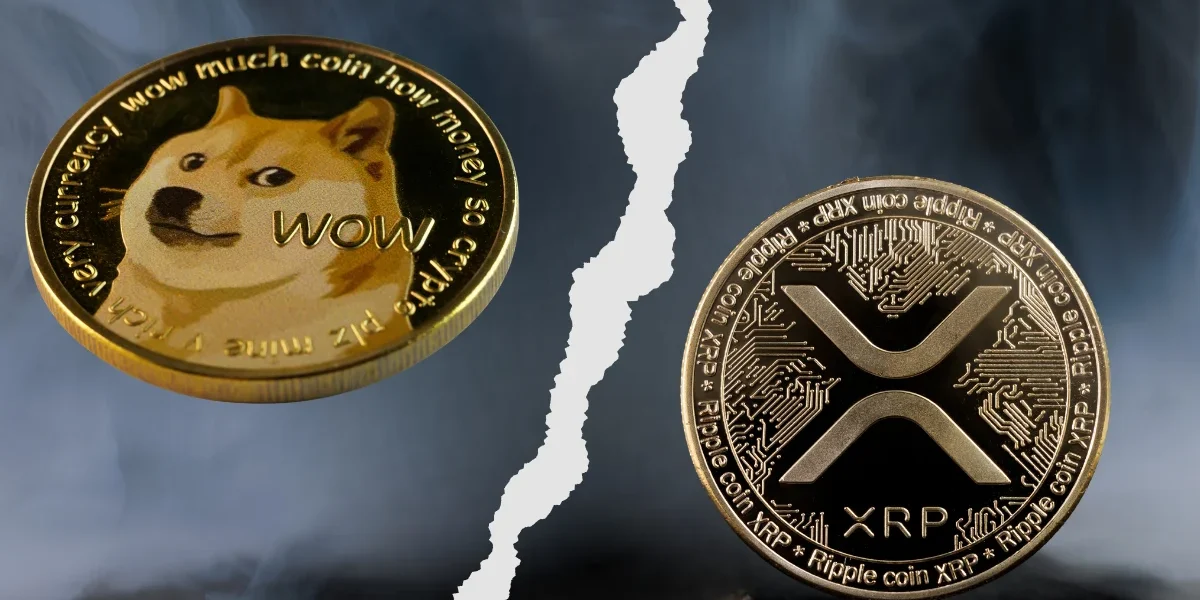
The XRP vs. Dogecoin debate continues to dominate crypto investing discussions in 2026. Investors want clarity. Not hype.
One asset is centered around cross-border payments and institutional networks, making it a key player in international transactions. The other benefits from retail enthusiasm and meme trends, capturing the lively spirit of the market.
So the real question is:
Which crypto offers stronger long-term investment potential, XRP or Dogecoin?
This comparison, based on data, includes:
- Market position
- Historical performance
- Volatility metrics
- Regulatory risk
- Supply mechanics
- Portfolio allocation strategy
All references are based on publicly available reporting from major financial publications and market data providers.
2026 Market Snapshot: XRP vs Dogecoin
| Metric | XRP | Dogecoin |
| Approx. Price (Feb 2026) | $1.40–$2.50 | $0.14–$0.40 |
| Market Cap | $86B–$152B | $49B–$61B |
| All-Time High | $3.84 (2018) | $0.73 (2021) |
| Supply Model | 100B Max | Inflationary (~5B/year) |
| Consensus | XRP Ledger Protocol | Proof-of-Work |
Key takeaway: XRP sustains a stronger institutional narrative, while Dogecoin continues to exhibit more robust retail-driven momentum cycles.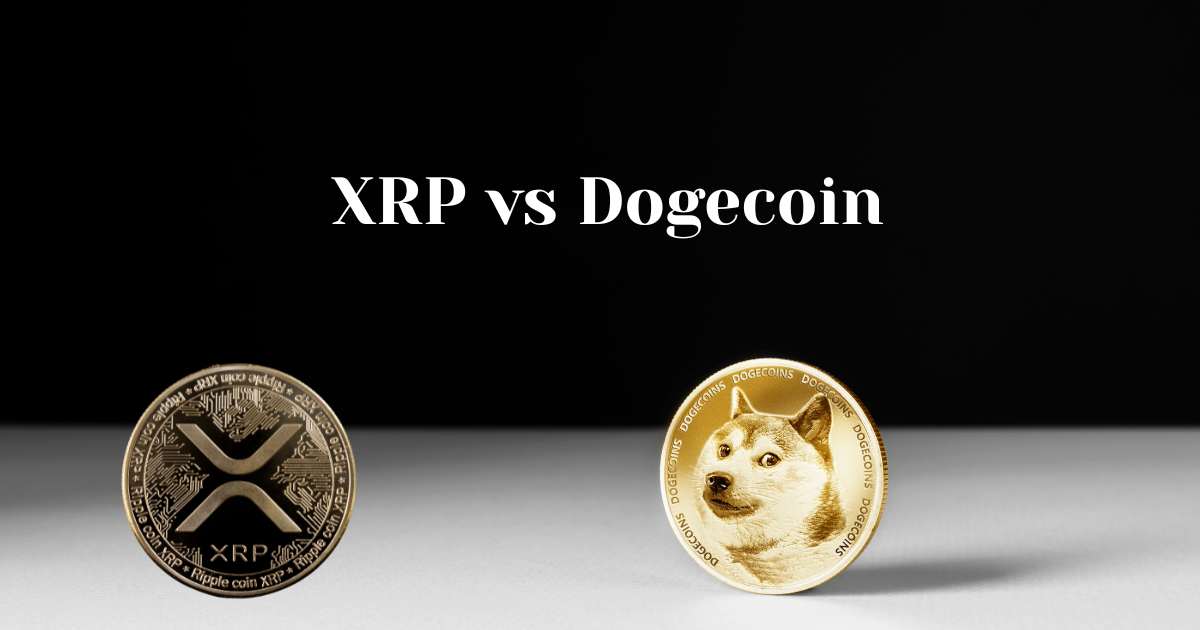
Historical Performance: What Past Cycles Reveal
Both assets delivered extreme returns during bull markets.
- XRP gained over 36,000% during the 2017 cycle.
- Dogecoin surged more than 15,000% in 2021 due to viral trading momentum.
The 2021 cycle showed structural differences:
- XRP rallied on regulatory clarity expectations.
- Dogecoin surged due to celebrity endorsements and social media catalysts.
According to a detailed market breakdown published by Yahoo Finance, XRP’s long-term outlook largely depends on adoption and legal clarity.
Utility Comparison: Infrastructure vs Meme Momentum
To gauge their long-term potential, examine how XRP and Dogecoin operate and how their designs affect adoption, volatility, and investor strategy.
XRP’s Core Function
XRP facilitates payment corridors within Ripple’s network. Its objective is to shorten settlement durations relative to conventional systems such as SWIFT.
- Transactions settle instantly.
- Fees are just fractions of a cent.
- No mining needed.
- Less energy consumption than proof-of-work systems.
This infrastructure positioning attracts fintech partnerships and enterprise interest. Institutional adoption remains XRP’s strongest long-term thesis. A MEXC analysis explains liquidity and trading behavior differences between XRP and Dogecoin, showing how meme-driven assets respond to market sentiment.
Dogecoin’s Core Identity
Dogecoin began as a meme. It evolved into a community-backed payment token.
- Proof-of-work mining
- Merged mining with Litecoin
- Inflationary issuance (5 billion coins annually)
- High sensitivity to social media sentiment
Dogecoin’s strength is narrative velocity. XRP’s strength is structured utility.
Volatility & Risk Metrics (Data-Based)
Crypto remains volatile. That will not change in 2026.
Recent trading data shows:
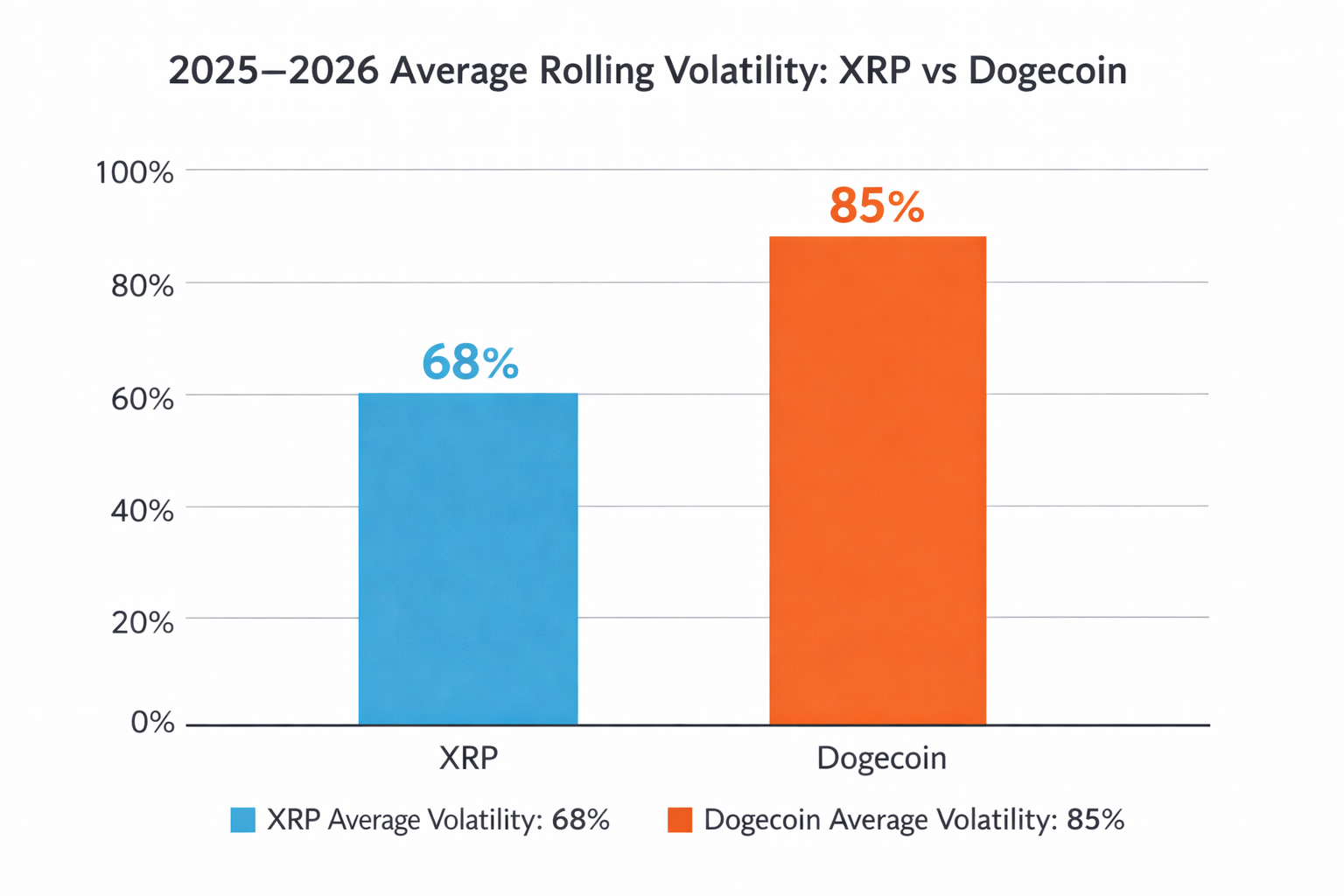
- XRP 30-day rolling volatility averages ~68%
- Dogecoin 30-day rolling volatility often exceeds 85% during meme cycles
Dogecoin tends to experience sharper spikes and faster reversals. A comparative outlook by Nasdaq highlights long-term positioning differences between XRP and Dogecoin, emphasizing growth narratives and institutional trends.
Data Chart: 1-Year Volatility Comparison (Placeholder)
Case example:
In May 2021, Dogecoin dropped over 30% within days following a media event. During regulatory clarity updates, XRP rallied nearly 50% in a week.
Higher volatility increases both risk and opportunity.
Regulatory Risk: A Key Differentiator
Regulation remains a major valuation driver.
XRP faced SEC litigation beginning in 2020. Partial rulings improved sentiment in 2023–2024. However, regulatory clarity still influences price action.
Dogecoin has not faced direct securities classification litigation. Still, broader crypto regulations can affect exchange listings and liquidity.
For deeper macro timing insights, review our analysis of Bitcoin market cycles and liquidity trends in 2026.
Supply & Tokenomics: Scarcity vs Inflation
Supply mechanics shape long-term pricing models.
| Factor | XRP | Dogecoin |
| Max Supply | 100 Billion | No Cap |
| Annual Issuance | Controlled Release | 5 Billion Coins |
| Scarcity Model | Fixed | Inflationary |
| Escrow System | Yes | No |
XRP’s capped supply supports scarcity arguments. Dogecoin’s inflation rate declines percentage-wise but continues indefinitely.
Long-term investors often prefer capped supply structures. Traders may prefer high-liquidity inflationary models. Finviz also evaluated return potential across market cycles in its market performance comparison of XRP vs Dogecoin.
2026–2027 Forecast Scenarios
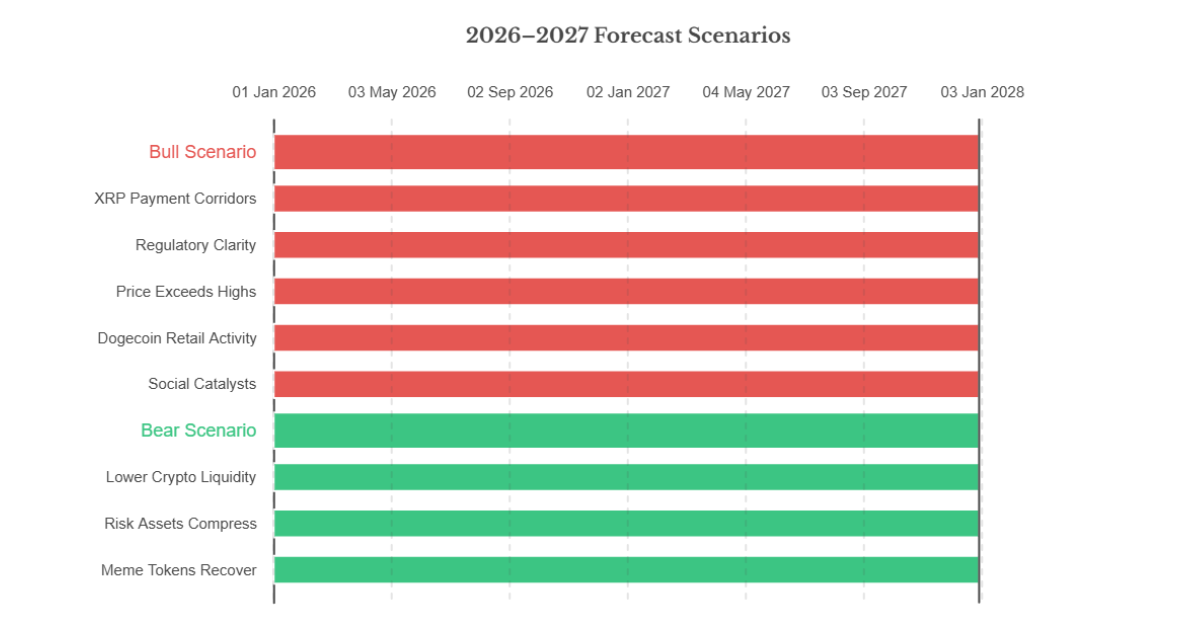
The forecast outcomes are determined by liquidity, adoption, and macroeconomic conditions.
The Bull Scenario
- XRP benefits from increased payment corridors.
- Regulatory clarity encourages institutional flows.
- Price returns or exceeds previous highs.
- Dogecoin benefits from renewed retail activity.
- Social catalysts fuel speculative breakouts.
The Bear scenario
- Tighter monetary policy lowers crypto liquidity.
- Risk assets tend to compress.
- Meme-driven tokens recover faster.
Before you invest in altcoins, read our comprehensive crypto exchange comparison guide to learn about exchange fees and liquidity risks.
XRP vs Dogecoin: Key Differences
Investors ask: What mainly differs between XRP and Dogecoin? It comes down to purpose, supply, and price factors.
- Purpose and Use Case
XRP is designed for cross-border financial infrastructure.
Dogecoin is centered on community-based transactions and tipping.
- Supply Structure
XRP’s supply is capped at 100 billion tokens.
Dogecoin has no maximum supply and issues about 5 billion new coins each year.
- Consensus Mechanism
XRP employs a validator-based consensus system.
Dogecoin relies on proof-of-work mining.
- Price Catalysts
XRP’s price movements are influenced by regulation and institutional adoption.
Dogecoin’s value is driven by retail sentiment and viral trends.
For clearer information, you can check the key differences between XPR and Dogecoin.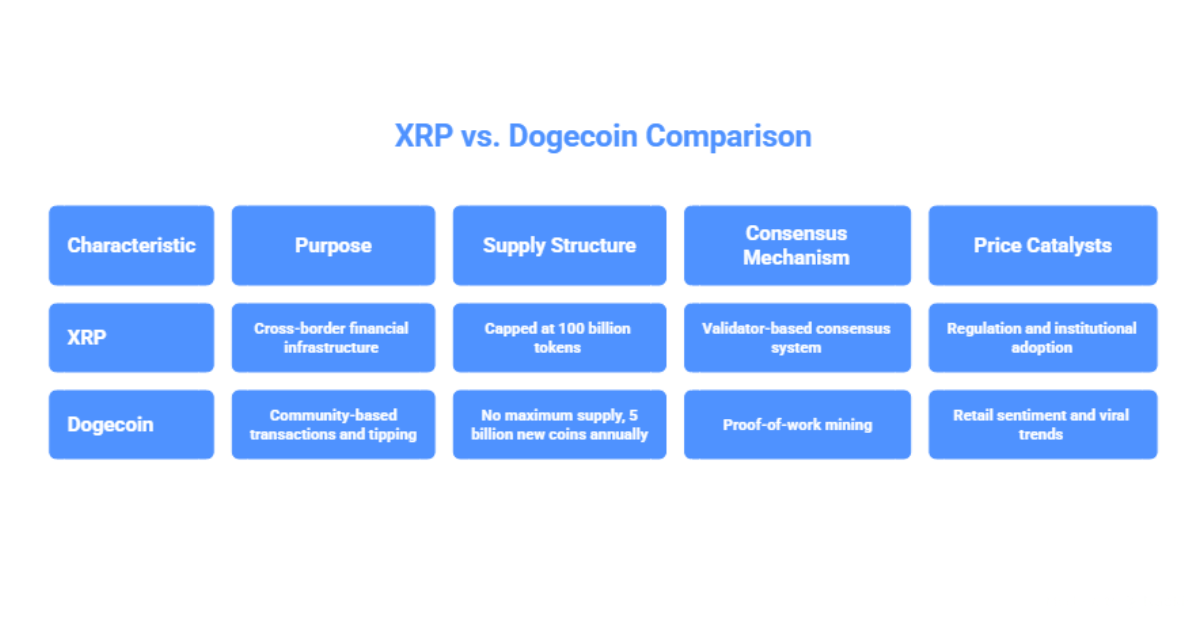
Portfolio Allocation Strategy
Instead of asking, “Which is better?” Ask:
What fits my risk tolerance?
Conservative Strategy
- Focus mainly on Bitcoin and Ethereum.
- Allocate less than 5% to speculative altcoins.
- Favor XRP for structured utility exposure.
Moderate Strategy
- Blend XRP and Dogecoin exposure.
- Maintain strict position sizing.
- Rebalance quarterly.
Aggressive Strategy
- Trade volatility cycles.
- Monitor regulatory developments closely.
- Avoid excessive leverage.
If you are new to crypto investing, review our beginner-friendly guide on how to buy Bitcoin safely in the United States.
Key Risks Investors Must Consider
- Regulatory uncertainty
- Exchange liquidity risk
- Market manipulation
- Macroeconomic tightening
- Competition from CBDCs
- Social-media-driven volatility
Crypto remains speculative. Risk management is essential.
Methodology & Data Sources
This analysis uses:
- Historical pricing data from CoinMarketCap
- Volatility metrics from market platforms
- Institutional reporting from Yahoo Finance and Nasdaq
- Market comparisons from Finviz and MEXC
- Public regulatory filings
All data reflects publicly available information as of February 2026.
XRP vs Dogecoin in 2026
The XRP vs Dogecoin debate reflects two investment philosophies.
XRP represents financial infrastructure and structured adoption.
Dogecoin represents sentiment cycles and retail momentum.
If you prioritize utility and capped supply dynamics, XRP may offer stronger long-term positioning.
If you trade volatility and understand meme cycles, Dogecoin may offer tactical upside.
There is no universal winner.
The smarter approach is aligning exposure with your time horizon, risk tolerance, and liquidity outlook.
Before You Invest, Take the Next Step
Before allocating capital:
- Review your total crypto allocation.
- Define entry and exit strategies.
- Monitor regulatory updates.
- Avoid emotional trading.
For deeper market breakdowns and risk-aware crypto strategies, explore more analysis at FinanceCurves and stay ahead of structural digital asset trends. Smart investing beats hype.
FAQs
What is the main difference between XRP and Dogecoin?
XRP is designed for cross-border payment infrastructure and institutional adoption, while Dogecoin is community-driven and thrives on meme cycles.
Which crypto is more volatile, XRP or Dogecoin?
Dogecoin shows sharper short-term price swings due to social media and retail sentiment, whereas XRP reacts primarily to regulatory and institutional developments.
Does XRP have a supply cap?
Yes. XRP has a fixed maximum supply of 100 billion tokens, which supports scarcity and long-term value arguments.
Can Dogecoin reach $1 in 2026?
Dogecoin reaching $1 depends on sustained retail demand, social momentum, and overall market liquidity; it remains speculative.
Is XRP safer because of institutional backing?
Institutional partnerships improve credibility, but regulatory risk and market volatility still exist.
How should investors approach XRP vs Dogecoin in a portfolio?
Conservative investors may favor XRP for utility exposure, while Dogecoin can be a small speculative allocation; always align with risk tolerance and time horizon.
Disclaimer:
This article is for information and education purposes only. It is not financial, investment, or trading advice. Cryptocurrencies are highly volatile and risky, and you could lose some or all of your money. Always do your own research and speak with a licensed financial advisor before making any investment decisions. Past performance does not guarantee future results.

Tanner Eric is a Senior Cryptocurrency Trading Specialist at FinanceCurves.com with extensive experience in financial markets and digital asset trading. He specializes in Bitcoin market cycles, price action analysis, blockchain infrastructure, and structured risk management frameworks. Tanner’s research is grounded in data-driven analysis, macroeconomic context, and disciplined capital allocation principles, providing institutional-quality insights that help investors and traders navigate volatile markets with strategy, precision, and a long-term perspective.