When money hits your bank account from the U.S. government, it can feel like a bonus—but not all payments are created equal. Some are stimulus checks designed to boost the economy, while others are tax refunds returning money you’ve already paid.
For investors, traders, and everyday taxpayers, knowing the difference is not just interesting—it can affect spending, market behavior, and short-term money decisions. In this guide, we explain how Economic Impact Payments differ from IRS tax refunds, how each is processed, and why this difference matters all year round, not just during tax season.
What Are Economic Impact Payments?
Economic Impact Payments (EIPs), commonly called stimulus payments, are federally authorized transfers designed to provide financial support and boost economic activity during periods of economic stress.
Although the IRS distributes these payments, they are funded by legislation passed by Congress and originate from the U.S. Treasury.
Important Characteristics of Economic Impact Payments
- are not determined by your tax payment, but rather by federal law.
- intended to increase consumption and strengthen the economy.
- Income, filing status, and dependents all affect eligibility. Sent automatically based on IRS data.
- It represents the influx of fresh money into the economy rather than the return of existing funds.
The IRS usually uses previous tax returns or Social Security records to determine who qualifies. Because these payments bring new money into households, they can influence how people spend and how markets react in ways that tax refunds do not. For more details, see the 2026 IRS $2,000 direct deposit schedule and updates.

What Are IRS Tax Refunds?
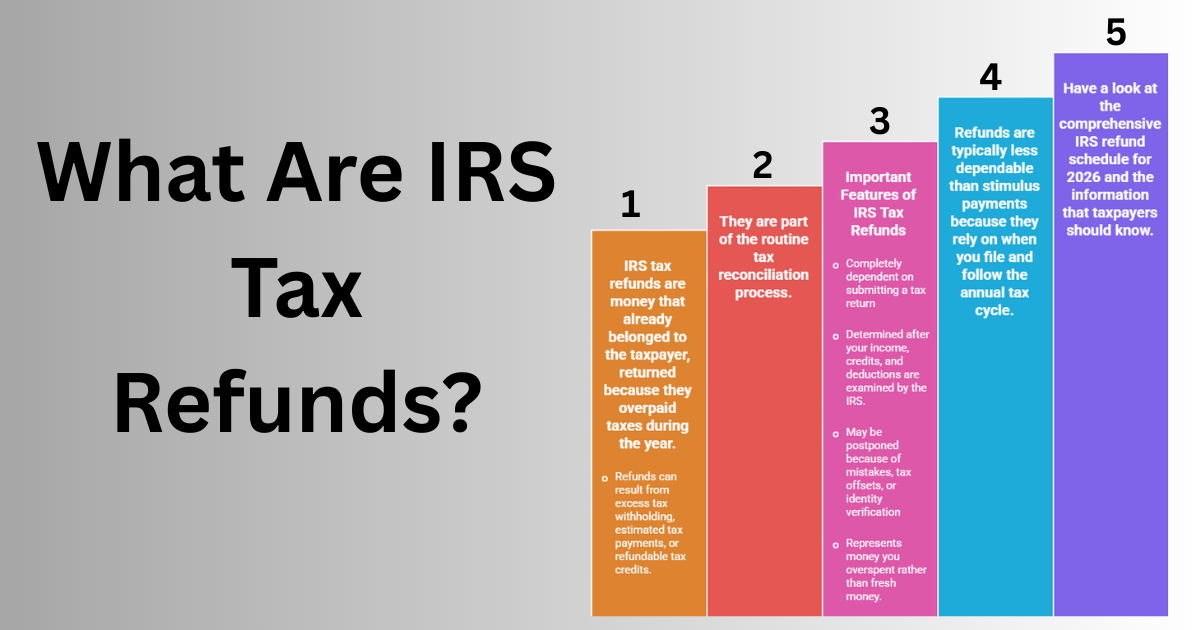
Unlike EIPs, IRS tax refunds are money that already belonged to the taxpayer, returned because they overpaid taxes during the year.
Refunds can result from excess tax withholding, estimated tax payments, or refundable tax credits. They are part of the routine tax reconciliation process.
Important Features of IRS Tax Refunds
- Completely dependent on submitting a tax return,
- determined after your income, credits, and deductions are examined by the IRS.
- may be postponed because of mistakes, tax offsets, or identity verification, which represents money you overspent rather than fresh money.
Because they rely on when you file and follow the annual tax cycle, refunds are typically less dependable than stimulus payments. Have a look at the comprehensive IRS refund schedule for 2026 and the information that taxpayers should know.
Core Difference: New Money vs. Returned Money
Although both EIPs and tax refunds may look the same on a bank statement, their impact on the economy is very different:
Comparison Table: EIPs vs. Tax Refunds
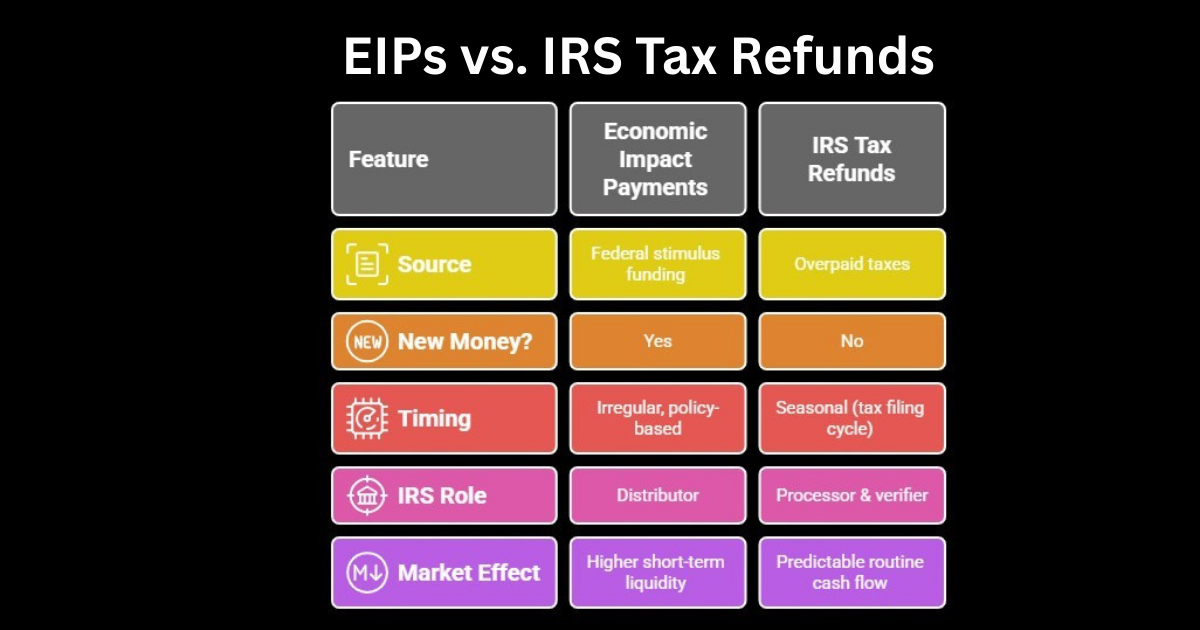
| Feature | Economic Impact Payments | IRS Tax Refunds |
| Source | Federal stimulus funding | Overpaid taxes |
| New Money? | Yes | No |
| Timing | Irregular, policy-based | Seasonal (tax filing cycle) |
| IRS Role | Distributor | Processor & verifier |
| Market Effect | Higher short-term liquidity | Predictable routine cash flow |
Economic Impact Payments bring fresh liquidity into homes and markets, which can change short-term market dynamics and momentarily increase consumer spending. Tax refunds, on the other hand, only reimburse taxpayers for money they previously earned but surrendered through withholding.
According to the Bureau of Economic Analysis, increased consumer liquidity generally correlates with a rise in short-term consumption and retail sales, particularly during stimulus distributions.
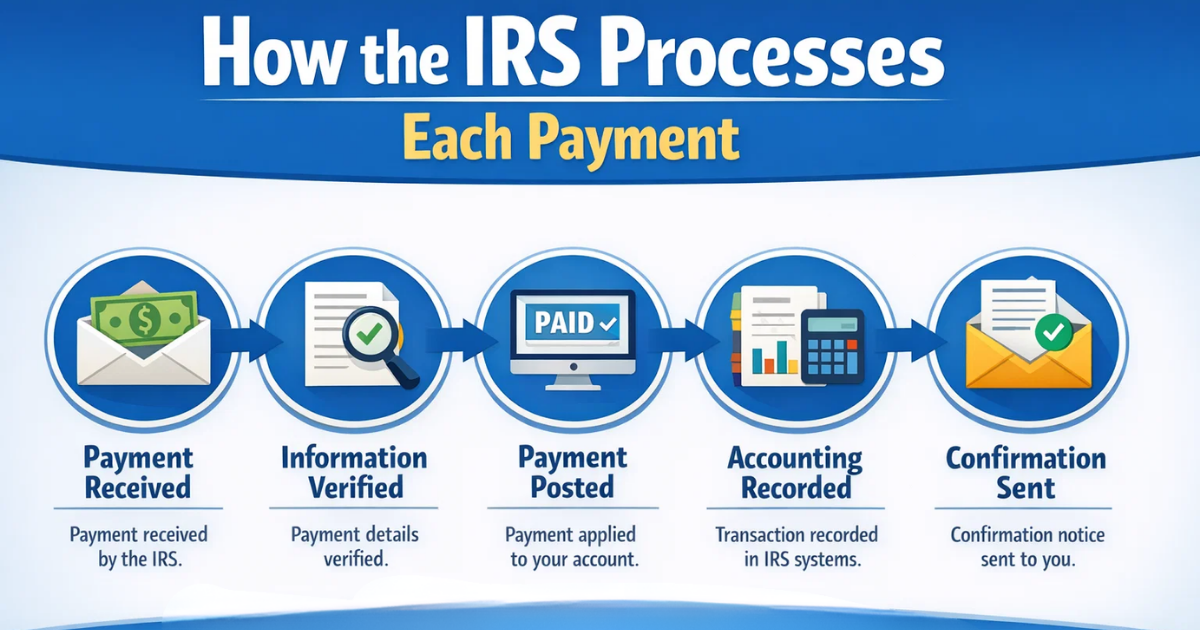
 How the IRS Processes Each Payment
Although the IRS makes both payments, its internal processes and priorities differ significantly.
Processing Economic Impact Payments
- The IRS relies heavily on taxpayer records from prior years
- Eligibility data is used to issue payments automatically
- If a payment is missed, reconciliation can occur through a tax return
- EIPs may be protected from certain offsets that affect refunds
Although the availability and accuracy may vary based on the payment phase, taxpayers can use official IRS tools like Get My Payment to check the status of stimulus payments.
IRS Tax Refund Processing
- Before any refund can be computed, a tax return must be filed.
- The IRS verifies identity, income, credits, and deductions.
- Errors or problems, like identity verification, may cause refunds to be delayed.
- Child support and delinquent federal obligations may also be deducted from refunds.
The refund process is more structured and focused on compliance compared to EIP distribution, which prioritizes quick delivery.
 Timing and Impact on Financial Behavior
The timing of payments influences the responses of households and markets.
Stimulus Payment Timing
- Policy-driven and unpredictable
- Often issued in large waves soon after legislation passes
- Can generate temporary spikes in consumer spending and speculative investment
Because stimulus payments are irregular, they may lead to short-term changes in consumption or even retail trading activity among individual investors.
Tax Refund Timing
- Seasonal and highly predictable
- Concentrated during the spring tax season
- Spread over weeks rather than large simultaneous disbursements
Due to this predictability, refunds tend to produce steady spending patterns rather than sudden economic shifts. A report from the Federal Reserve shows that many households use refunds for savings, debt repayment, or planned expenses.
Investor Insight: Market Impact Comparison
| Factor | Economic Impact Payments | IRS Tax Refunds |
| Cash Flow Impact | Instant liquidity infusion | Routine, expected inflow |
| Market Volatility | Short-term spikes | Low, predictable |
| Consumer Spending | Sudden surge | Gradual, stable |
| Investor Interest | Liquidity-driven | Predictability-driven |
Understanding the type of money entering the economy helps traders and analysts anticipate liquidity cycles and potential market catalysts.
According to the U.S. Department of the Treasury, tracking liquidity flows enables market participants to better gauge short-term economic behavior.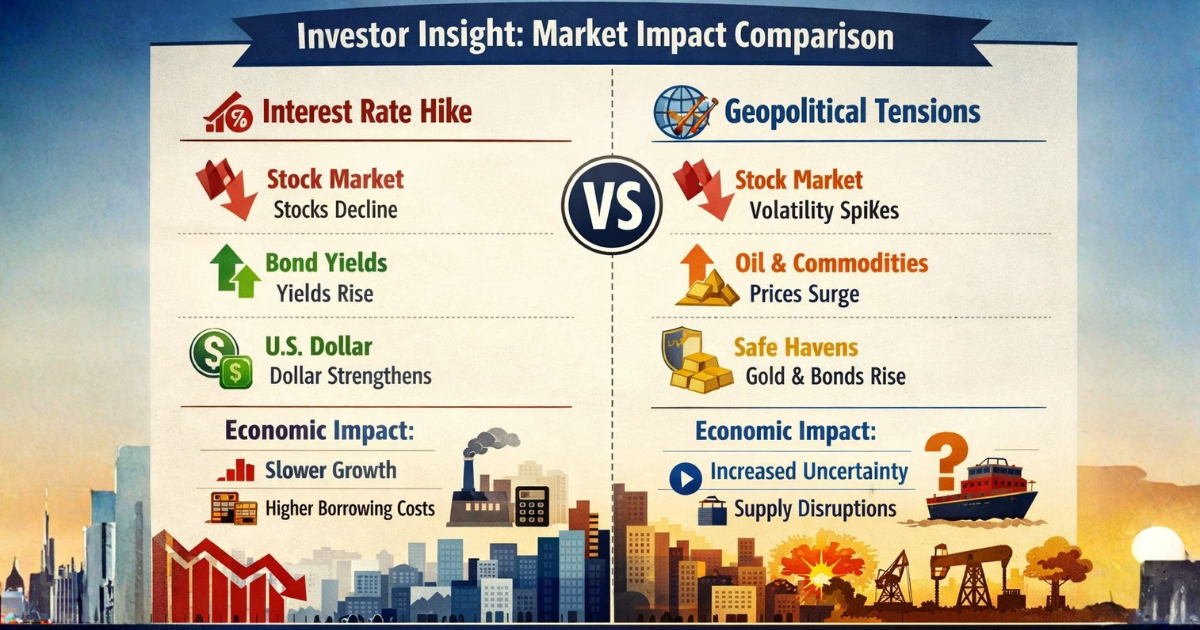
Taxability and Reporting
It’s crucial to understand how the IRS treats each tax payment. Proper understanding of this helps you stay compliant and avoid surprises when filing your yearly tax return.
Economic Impact Payments
- Usually not considered taxable income
- Set up as refundable credits
- Do not increase your tax bill
IRS Tax Refunds
- Not taxable when returning money you already paid
- Some refundable credits may affect future tax filings
- Neither stimulus payments nor standard tax refunds increase your taxable income for the year they are received
Eligibility: Why You Might Receive One but Not the Other
Because taxpayers are not always eligible for both kinds of payments. Thus, it is crucial to understand eligibility. The regulations differ greatly, and understanding these differences helps prevent misunderstandings and the loss of advantages.
Stimulus Eligibility
- Income thresholds
- Filing status
- Dependents
- Legislative criteria
Someone may receive a stimulus payment even without recent tax filings if the IRS has sufficient information.
Refund Eligibility
- Must file a tax return
- Must have overpaid taxes or qualified for refundable credits
- Dependent on IRS verification
This explains why some taxpayers may receive a refund and not a stimulus or vice versa.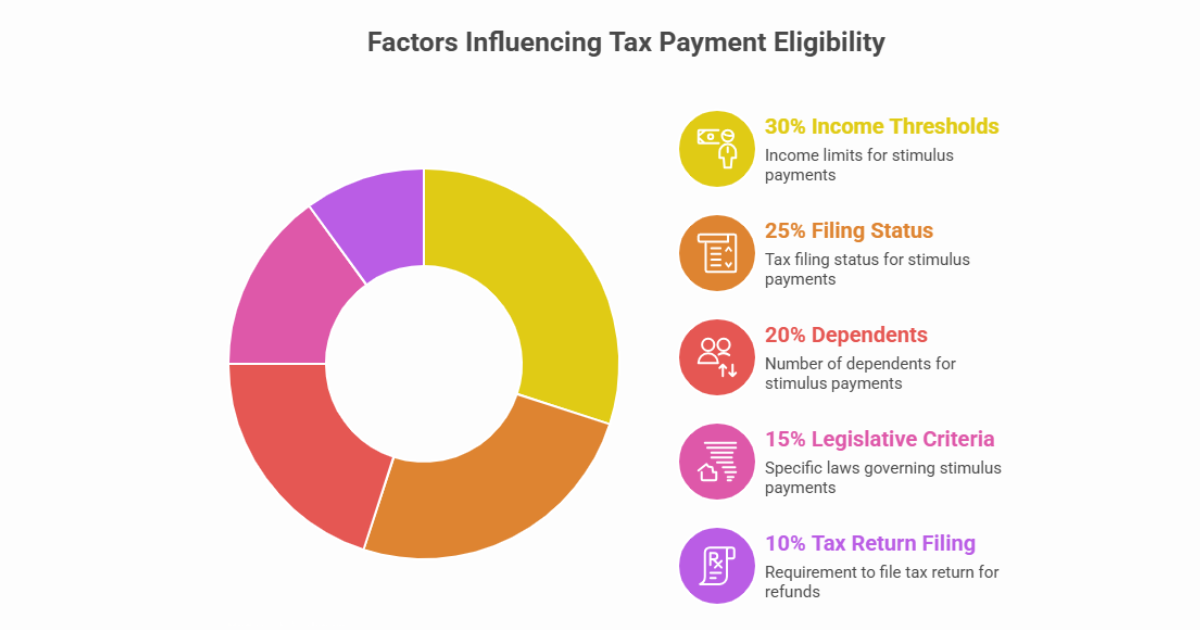
Why Investors Track IRS Payments Closely
Although Economic Impact Payments vs. IRS tax refunds may appear similar when they arrive in your bank account, their roles in the economy are fundamentally different. Stimulus payments inject new money to stimulate economic activity, whereas tax refunds are your own funds returned after the tax reconciliation.
For investors, traders, and analysts, identifying these payments helps forecast liquidity, consumer behavior, and market trends. Plus, the insights are valuable beyond tax season. For consistent and reliable analysis of IRS payments, refund timings, and economic indicators, follow FinanceCurves, where clear policy insights are combined with data-driven financial analysis.
Frequently Asked Questions
Are Economic Impact Payments the same as IRS tax refunds?
No, EIPs are government stimulus funds, while tax refunds return money that taxpayers overpaid.
Does the IRS issue both payments?
Yes! The IRS distributes both, but under very different rules and processes.
Are stimulus payments taxable?
No, most EIPs are not considered taxable income.
Why did I get a refund but no stimulus?
Eligibility for stimulus is based on legislative criteria, while refunds depend on tax overpayment.
Can IRS refund delays affect consumer spending?
Yes. Significant delays can temporarily reduce household liquidity during tax season.
How can I check IRS payment status?
Use official IRS tools like “Check My Refund” or “Get My Payment” for updates.
Disclaimer
The information provided on this website is for informational and educational purposes only. While we strive to ensure accuracy and keep our content up to date, FinanceCurves makes no guarantees regarding the completeness, reliability, or accuracy of any information published.
Nothing on this site constitutes financial, tax, legal, or investment advice. Readers should consult a qualified financial advisor, certified tax professional, or licensed attorney before making any financial decisions. Your individual situation may vary, and decisions based on information from this website are made at your own risk.
FinanceCurves may reference government agencies, financial institutions, or official programs for informational purposes only. We are not affiliated with, endorsed by, or connected to any government entity, including the IRS or any federal or state agency. Some content may contain links to third-party websites for additional context or resources. We are not responsible for the content, accuracy, or practices of any external sites.
By using this website, you agree to this disclaimer and our terms of use.

Charles Cooper is a Senior Cryptocurrency Analyst at FinanceCurves.com with over 10 years of experience in financial markets. He specializes in Bitcoin, digital assets, blockchain technology, and on-chain analysis, providing research-driven insights grounded in market data, macroeconomic trends, and risk management principles. Charles helps readers navigate volatility, adoption trends, and evolving regulatory and market dynamics in the cryptocurrency and broader financial landscape.