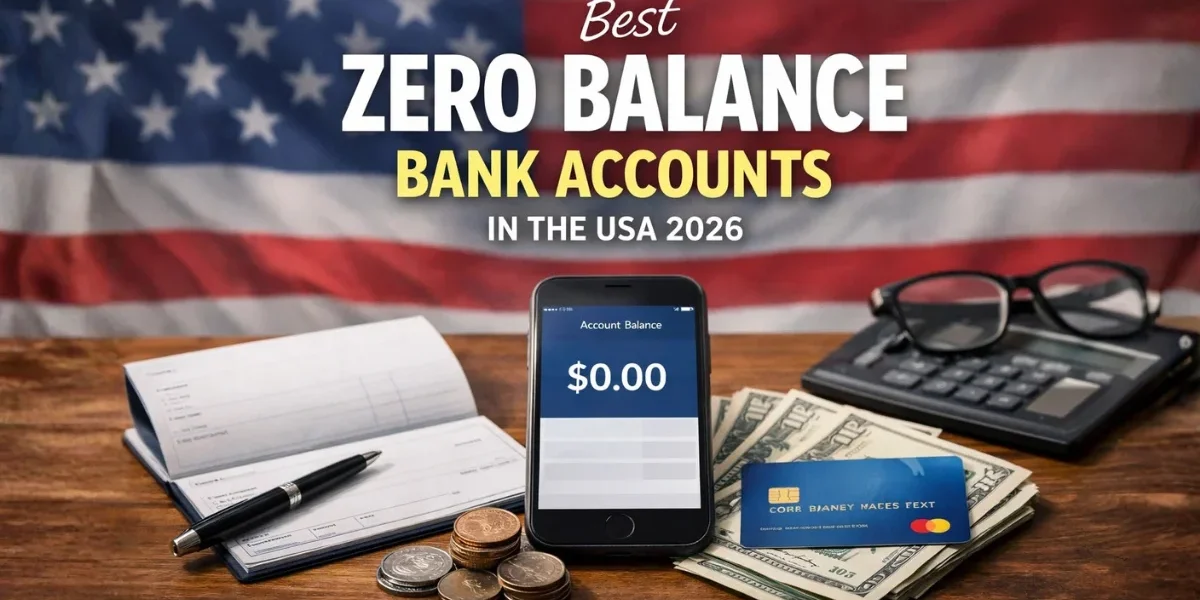
Whether you’re a beginner exploring personal finance, a freelancer managing irregular income, a crypto user bridging fiat banking, or simply someone who dislikes minimum balance fees, this guide breaks down everything you need to know about zero balance bank accounts in the USA in 2026. From how they work to top account options and practical tips, we cover it all in plain, easy-to-understand language.
Let’s dive in.
What Is a Zero Balance Bank Account? Meaning, Features & Examples
A zero balance account (ZBA) is exactly what it sounds like: a bank account that doesn’t require a minimum balance to stay active. Unlike traditional checking or savings accounts that penalize you if your balance falls below a threshold, a zero balance bank account remains valid even if your balance hits $0.
In order to preserve liquidity and cut down on idle cash, ZBAs frequently automatically transfer money to a primary account for businesses.
For consumers: Many U.S. banks now offer similar no-minimum-balance accounts designed for everyday users, combining convenience with modern online features.
Pro Tip: Always choose an FDIC-insured bank to ensure your deposits up to $250,000 are protected. Learn more on FDIC. 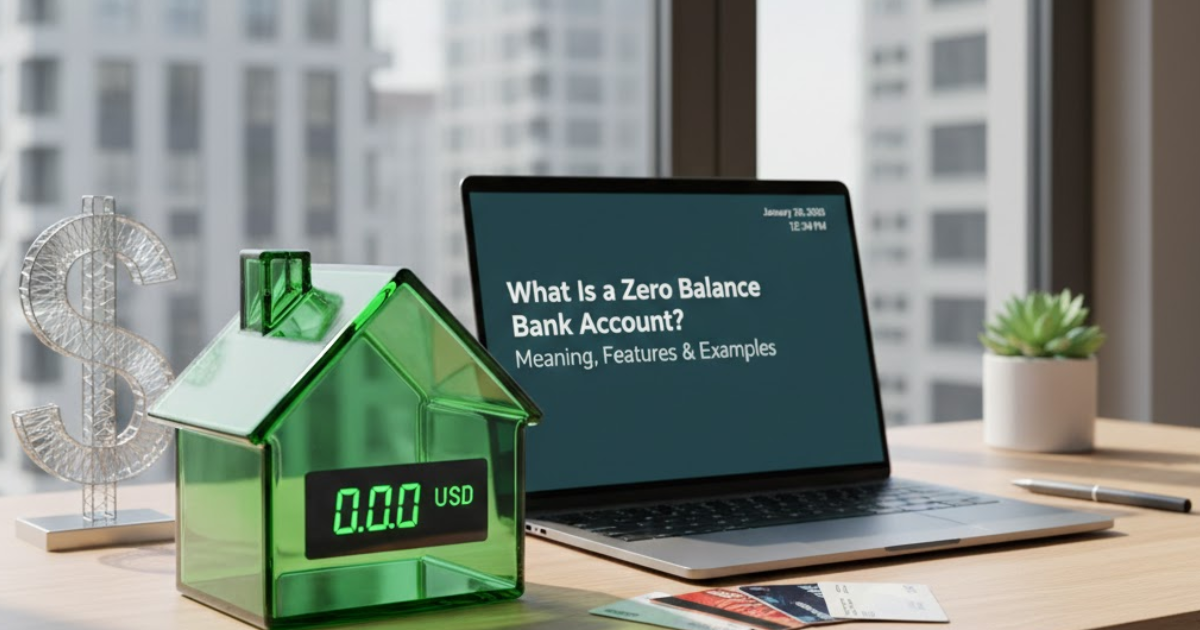
Why Zero Balance Bank Accounts Matter in 2026
Zero balance accounts are important in the fast-paced financial world of today because they
- Get rid of the minimum balance requirements
- Reduce monthly maintenance fees
- Make budgeting easier for novices and students.
- Assist newcomers with digital finance and banking
For crypto users, these accounts make it easier to:
- Transfer fiat currency to cryptocurrency exchanges.
- Get paid from digital platforms.
- Manage spending without worrying about hidden fees
Understanding banks vs crypto exchanges in 2026 can help you choose the right account for bridging traditional and digital finance.
They also align with modern, mobile-first banking trends and encourage financial inclusion with fewer barriers to entry. For a deeper explanation of ZBAs, see Investopedia.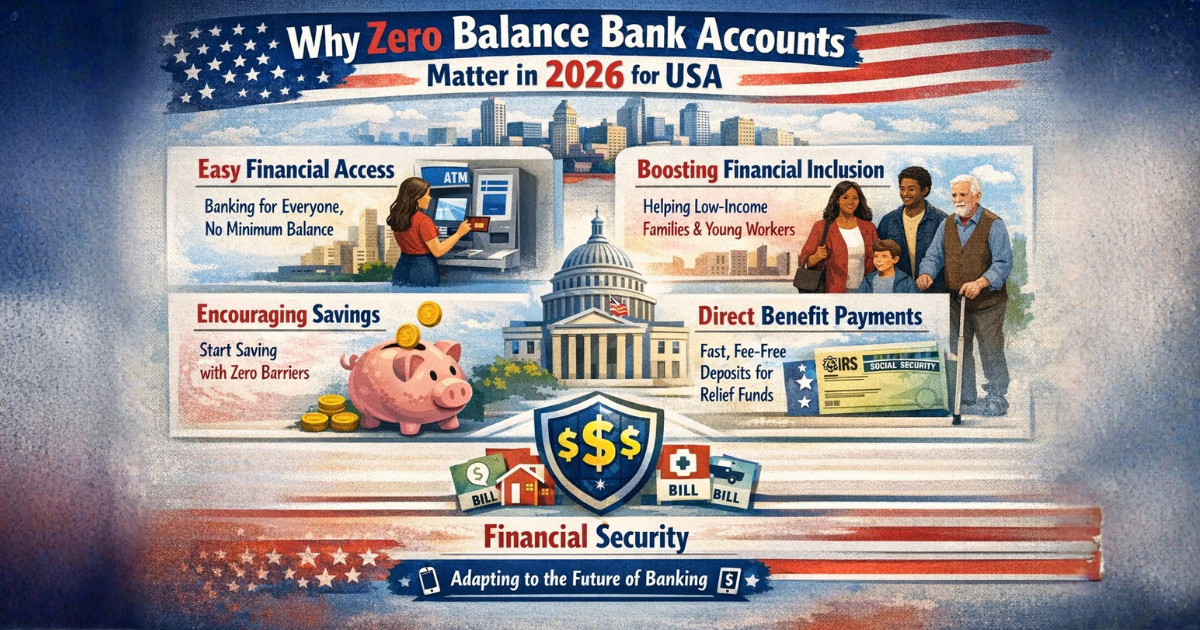
Eligibility Requirements for Zero Balance Accounts
Before applying, make sure you meet the basic eligibility requirements:
-
- U.S. residency
- Social Security Number (SSN)
- Individual Taxpayer Identification Number (ITIN)
- Age 18+
- Online verification and ID documents
For foreign applicants or minors, particular banks may have unique requirements.
Tip: These accounts are perfect if you want to receive IRS direct deposit payments without worrying about minimum balance fees.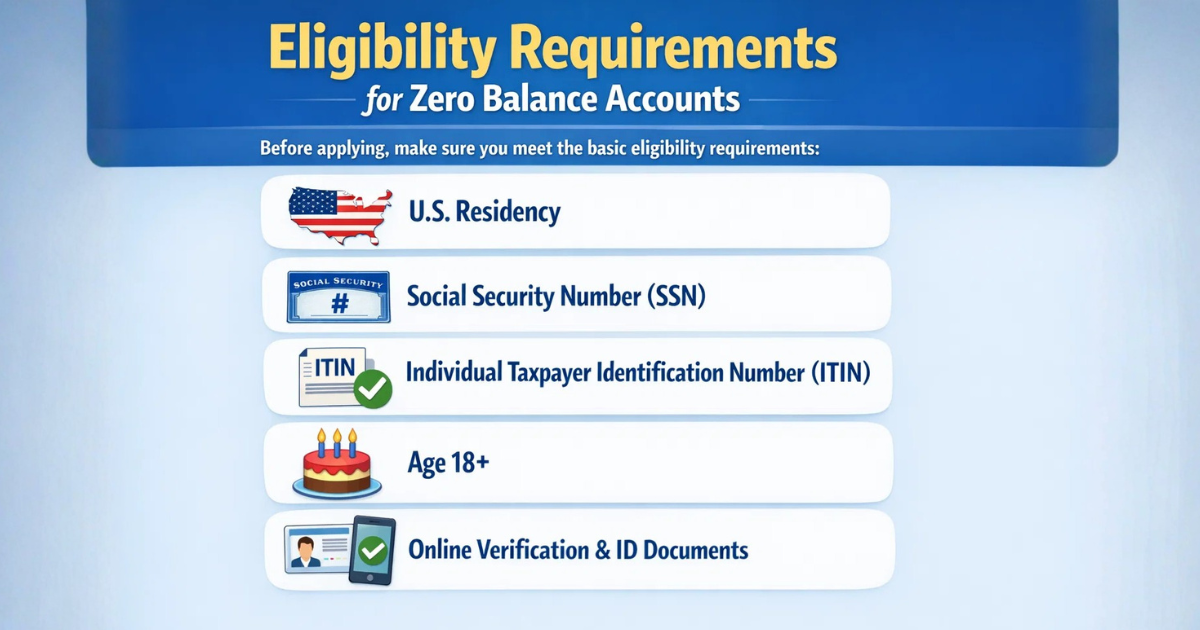
How Zero Balance Accounts Work (Step-by-Step)
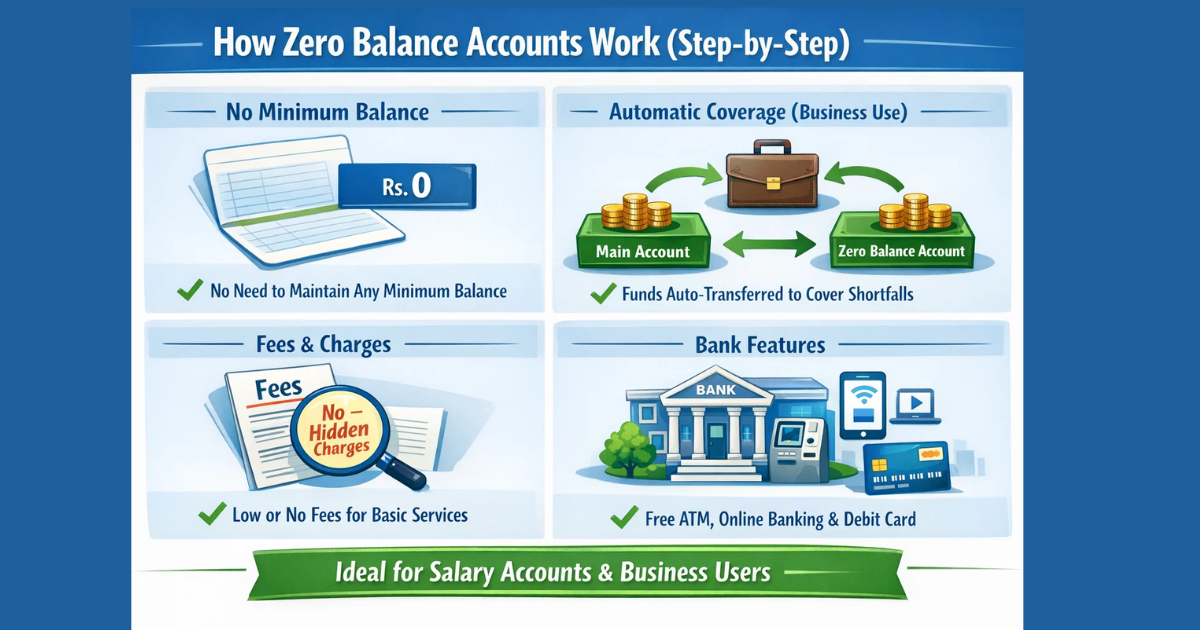
Here’s a simple breakdown of how these accounts function:
- No Minimum Balance: Your balance can drop to $0 without penalties.
- Automatic Coverage (Business Use): Business accounts often sweep funds from a master account to cover debits, keeping the account at zero.
- Bank Features: Most consumer zero balance bank accounts still provide debit cards, online banking, mobile apps, and direct deposit.
- Fees & Charges: Overdrafts, out-of-network ATM fees, and card replacements may still apply—read the fine print.
Pro Tip: If you’re moving USD into crypto, check out our guide on how to avoid bank fees when transferring USD to crypto exchanges.
Zero Balance vs Traditional Checking Accounts
| Feature | Zero Balance Account | Traditional Checking |
| Minimum Balance | ❌ No | ✔ Often required |
| Monthly Fees | ❌ Typically none | ✔ Often yes |
| Overdraft Protection | Optional | Common |
| Best For | Beginners, low-fee banking | Maybe fee-free with conditions |
Takeaway: Zero balance accounts simplify banking, remove fee surprises, and are beginner-friendly.
Top Zero Balance Bank Accounts in the USA for 2026
Here are some of the best zero balance or no-minimum-balance accounts in 2026:
| Bank | Minimum Deposit | Maintenance Fee | Highlights | Best For |
| Axos Bank Rewards Checking | $0 | $0 | Earn up to 3.30% APY on qualifying balances on a modern online platform | Interest + no fees |
| NBKC Bank Everything Account | $0 | $0 | $12/month ATM fee reimbursements, no overdraft/returned item fees | Everyday spending |
| Chime Spending Account | $0 | $0 | Early direct deposit, fee-free structure, app-based tools | App-savvy users |
| Simple (or similar online banks) | $0 | $0 | Budgeting tools, easy transfers, clean UI | Tech-native users |
Note: Not all banks label these specifically as “zero balance accounts,” but functionally, they operate with no minimum balance and no monthly fees.
Bank users can learn efficient fund management with zero balance. Furthermore, when it comes to seeing a trustworthy comparison of top US accounts, check NerdWallet.
Are Zero Balance Accounts Safe in the USA?
Yes, as long as the bank is FDIC-insured or regulated. Your account and funds are protected even if your balance is $0.
Always check:
- Overdraft Policies
- ATM fee refund
- Mobile safety features
- Support for direct deposit
Pro Tip: Use safe mobile authentication processes like biometrics, and review bank fee schedules carefully.
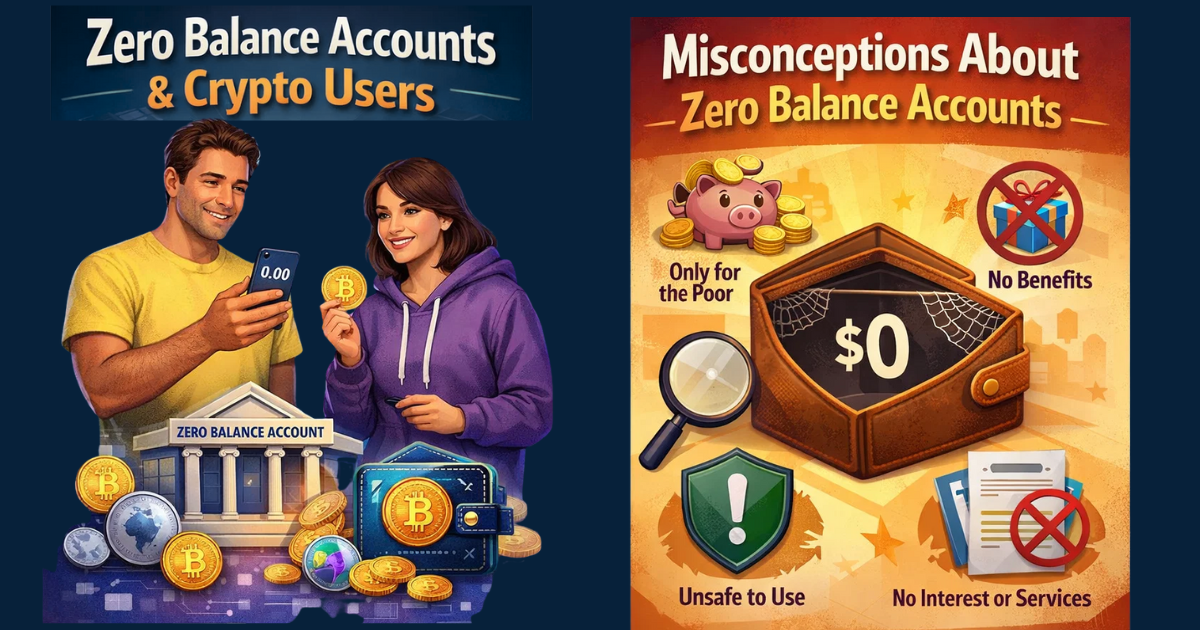
Zero Balance Accounts and Crypto Users
If you’re interested in crypto, a zero balance account can assist you in:
- Fund crypto exchanges effectively
- Avoid penalties for minimum balances that reduce your trading funds
- Manage your fiat budget before investing in cryptocurrency.
Misconceptions About Zero Balance Accounts
- ❌ Myth: Zero balance equals no features.
✅ Truth: Most accounts offer debit cards, online banking, and payment options. - ❌ Myth: Only businesses can have them
✅ Truth: Consumer zero balance accounts are common in retail banking with no minimums.
Things to Watch Out For
Even though these accounts are low-maintenance, watch for:
- Overdraft opt-in fees
- Out-of-network ATM charges
- Debit card replacement fees
- Cash deposit limitations
Being aware keeps your zero balance account truly stress-free.
Is a Zero Balance Bank Account Right for You?
By 2026, zero balance accounts will be among the easiest ways to bank stress-free, making them perfect for:
- Students and young adults who are new to banking
- Freelancers who have fluctuating or unpredictable income.
- Crypto newcomers seeking a no-fee fiat on-ramp.
- Anyone who dislikes fees for maintaining a minimum balance
They also complement your digital finance journey, including linking to financial apps and receiving government payments like IRS direct deposits. Stay informed, bank smarter, and confidently navigate digital finance with FinanceCurves.
FAQs
What are zero balance account benefits for beginners?
No minimum balance, no maintenance fees, easier budgeting — perfect for new bank users.
Can I open a zero balance bank account online?
Yes — most banks allow online signup without visiting a branch.
Do crypto users need a zero balance account?
It’s not required, but it helps reduce fees when moving USD to crypto platforms.
Is there a downside to zero balance accounts?
Watch for overdraft fees, out-of-network ATM charges, and some service fees.
Does a zero balance bank account affect your credit?
No — normal checking/banking activity does not impact your credit score.
Are zero balance accounts offered everywhere in the US?
Most major online and digital banks now offer no-minimum options in 2026.
Are zero balance accounts FDIC insured?
Yes, if offered by an FDIC-insured bank, your funds are protected up to $250,000.
Disclaimer
The information provided on this website is for informational and educational purposes only. While we strive to ensure accuracy and keep our content up to date, FinanceCurves makes no guarantees regarding the completeness, reliability, or accuracy of any information published.
Nothing on this site constitutes financial, tax, legal, or investment advice. Readers should consult a qualified financial advisor, certified tax professional, or licensed attorney before making any financial decisions. Your individual situation may vary, and decisions based on information from this website are made at your own risk.
FinanceCurves may reference government agencies, financial institutions, or official programs for informational purposes only. We are not affiliated with, endorsed by, or connected to any government entity, including the IRS or any federal or state agency. Some content may contain links to third-party websites for additional context or resources. We are not responsible for the content, accuracy, or practices of any external sites.
By using this website, you agree to this disclaimer and our terms of use.

Marshall Mason, Senior Market Analyst at FinanceCurves.com, has over 9 years of experience covering financial markets, cryptocurrencies, and macroeconomic trends. He delivers data-driven insights, independent analysis, and actionable guidance for investors and traders. Marshall leverages authoritative sources, market data, and regulatory updates to help readers navigate volatility, adoption trends, and the evolving landscape of global finance and digital assets.