If you thought crypto exchanges had the market on lock, guess what? Big banks just RSVP’d, and they’re not here for hors d’oeuvres. Thanks to a recent update from the Office of the Comptroller of the Currency (OCC), U.S. banks are now gearing up to dip their toes and possibly trunks into the crypto spot trading pool.
Yes, this is a potential game-changer for every exchange that’s been living in la-la-land, thinking retail traders owe them loyalty.
Let’s unpack this financial tentpole meets crypto chaos moment: what it means for retail traders, exchanges, and the future of Bitcoin (BTC).
The OCC Just Flipped the Script
Here’s the kicker: the OCC clarified that U.S. banks can facilitate crypto trades under a “riskless principal” model.
Translation? Banks can broker crypto trades without owning the assets themselves, acting as middlemen while avoiding exposure to price swings.
Think of it like your bank saying,
“We’ll trade your Bitcoin and Ether for you… but we won’t hold it, and we won’t sweat the volatility.”
This regulatory nod is huge. It leans into the idea that crypto doesn’t have to stay in the Wild West. TradFi, i.e., your bank, could be the well-washed, regulated agent handling your crypto orders.
And, of course, institutional players love regulated trust like coffee on a Monday morning.
JPMorgan Isn’t Just Window Shopping
The bank that literally once called crypto a scam and a pet rock might be getting serious. Reports suggest JPMorgan Chase is exploring crypto trading services, potentially spot and derivatives, for institutional clients.
Yes — Jamie Dimon’s crew might soon help hedge funds, pension managers, and other heavy hitters trade crypto under the JPM banner.
What does this mean?
- Wall Street isn’t quietly peering over the fence anymore.
- It’s asking where it can plug in the Ethernet cable.
- And it smells of profit.
Even without a final plan, the signal is clear: crypto is no longer fringe. It’s crossing into mainstream finance with legitimacy that regulators can’t ignore.
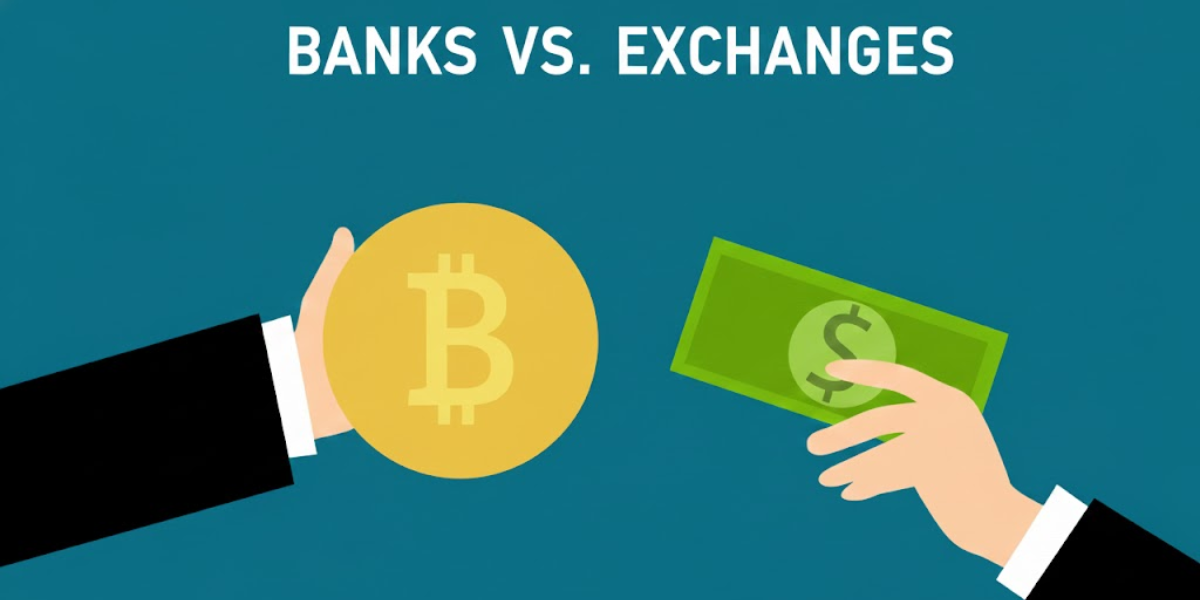
Banks vs. Exchanges: Competitive Landscape
Exchanges like Coinbase, Kraken, Gemini, and Binance aren’t down for a fight. But banks don’t need to compete everywhere, just in high-volume, high-margin areas.
Key areas banks could pressure exchanges:
- Spot trading for retail users: Easier, integrated with bank apps, and smoother onboarding.
- Regulatory trust: Banks bring legitimacy exchanges crave during downturns.
- Fee revenue: Brokers earn fees without market risk, a sweet arbitrage compared to exchanges’ market-making.
Implications for traders:
Retail traders making small, frequent buys could shift to banks for convenience and safety, potentially pulling volume away from traditional exchanges.
Lawyer takeaway: With regulatory legitimacy and institutional trust, banks might capture a meaningful chunk of retail order flow that once belonged to exchanges.
For traders wondering how Bitcoin prices might react as banks enter the crypto market, our latest Bitcoin price predictions give the full breakdown.
Banks vs Exchanges: At a Glance
| Feature | Banks | Exchanges |
| Spot Trading | Limited, regulated, riskless principal | Full market access, high liquidity |
| Custody | Bank-backed, regulated | Crypto-native, self-custody options |
| Fees | Predictable, low-risk | Market-driven, higher potential gains |
| Trust | Regulatory legitimacy | Crypto-native, familiar to traders |
| Target Users | Institutional, future retail | Retail & institutional |
Advantages Every Bank Offers
- Easier on-ramp for retail using bank apps
- Trusted, regulated environment
- Earn fees without market risk
Banks’ Playbook: Smart, Clean, Calculated
Don’t imagine every bank turning crypto-native overnight. Experts expect banks to start cautiously:
- Offer a small basket of highly liquid assets: Bitcoin, Ether, and regulated stablecoins.
- Avoid running full exchanges: Licensing headaches remain.
- Partner with market makers & infrastructure providers: Why reinvent the wheel?
Bottom line: Banks compete where it’s profitable, legal, and low-risk, letting crypto-native players handle the messy parts. As traditional crypto exchanges adapt to new competition, our crypto exchange guides help traders navigate platforms, fees, and custody options.”
What This Means for Crypto Exchanges
Crypto exchanges aren’t extinct, but they might face a serious squeeze in a few areas:
| Area | Potential Impact |
| Retail Spot Trading Volume | Shift to banks’ regulated apps |
| Custody Services | Banks could undercut non-bank custodians |
| Customer Convenience | Banks integrate with fiat rails and existing clients |
Analyst takeaway: Banks may squeeze U.S. spot-trading and custody revenue, pushing exchanges to focus on derivatives, DeFi, global markets, and niche products.
But this isn’t doom. It’s evolution.
Partnerships, Not Carnage
Banks may compete, but they also need crypto-native firms for liquidity, pricing, and routing.
“Coopetition” snapshot:
- Banks bring trust and regulatory cover
- Exchanges bring crypto expertise and infrastructure
- Traders get more routes to trade
- Regulators get more regulated venues
The ecosystem could grow with banks, not despite them.
Banks Just Crashed Crypto: What This Means for You
- Slow rollout: Banks entering crypto is serious but gradual.
- Exchanges adapt: They’ll innovate in derivatives and DeFi opportunities, and our DeFi & derivative trading posts provide deeper insights for advanced traders.
- Retail traders win: More regulated options = easier on-ramps for capital = higher liquidity.
FinanceCurves verdict:
Wall Street didn’t crash the party; it walked right through the front door. This isn’t Armageddon for exchanges; it’s a new battleground for liquidity, convenience, and trust.
Crypto isn’t dead. Banks just made it… a little more mainstream. For the full analysis on crypto market trends, exchange moves, and institutional impact, check out FinanceCurves for our expert breakdowns and updates.
Frequently Asked Questions
Q1: Can banks now trade crypto directly?
Yes. OCC guidance allows banks to facilitate crypto spot trades under a riskless principal model, they broker trades without holding the assets themselves.
Q2: Will JPMorgan offer crypto trading for everyone?
Not yet. Services are initially targeting institutional clients, like hedge funds and pension managers, before expanding to retail.
Q3: Are crypto exchanges at risk from banks?
Partially. Banks could take some retail spot trading volume, but exchanges still dominate derivatives, DeFi, and altcoins.
Q4: Does this make crypto safer for traders?
Yes — more regulated options improve security, compliance, and trust, especially for beginners.
Q5: Should retail traders switch to banks now?
Depends on strategy. Banks bring regulation and convenience; exchanges offer advanced features, lower fees, and broader crypto access.
Disclaimer
The information provided on this website is for informational and educational purposes only. While we strive to ensure accuracy and keep our content up to date, FinanceCurves makes no guarantees regarding the completeness, reliability, or accuracy of any information published.
Nothing on this site constitutes financial, tax, legal, or investment advice. Readers should consult a qualified financial advisor, certified tax professional, or licensed attorney before making any financial decisions. Your individual situation may vary, and decisions based on information from this website are made at your own risk.
FinanceCurves may reference government agencies, financial institutions, or official programs for informational purposes only. We are not affiliated with, endorsed by, or connected to any government entity, including the IRS or any federal or state agency. Some content may contain links to third-party websites for additional context or resources. We are not responsible for the content, accuracy, or practices of any external sites.
By using this website, you agree to this disclaimer and our terms of use.