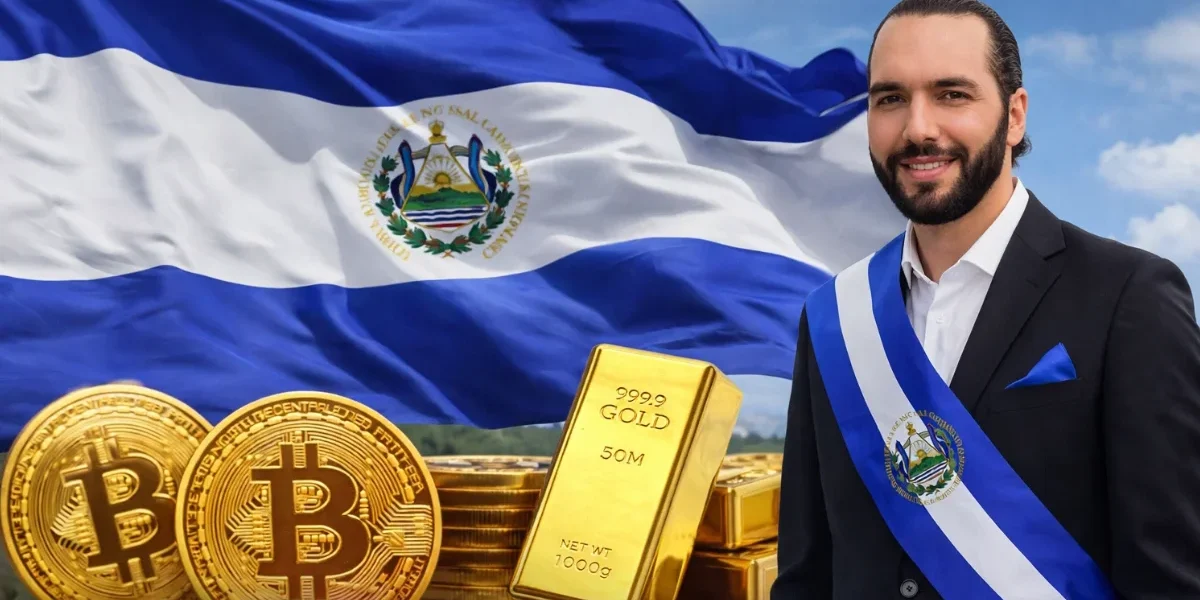
The El Salvador flag once stood for Central American tradition. Now it stands for something the financial world never expected. A small nation stacking both Bitcoin and gold while bigger economies are still feeling a bit unsure!. On January 29, 2026, President Nayib Bukele once again captured the attention of the public, making headlines and stirring emotions across the nation. His government added $50 million in physical gold to its reserves. The same day, it quietly added more Bitcoin to its already $635 million stack. That’s not just luck; it’s all part of a clever plan! While larger economies remain paralyzed by old-school thinking, El Salvador is rewriting the rules of the reserve game. Here is the logic behind the ‘Bitcoin-Gold’ bridge and why it matters for your next trade. Before diving deeper, you might also find this guide on How to Buy Bitcoin helpful, as it explains the basics of Bitcoin accumulation and long-term strategies.
El Salvador’s Bold Double-Down: Gold and Bitcoin on the Same Day
Most countries pick one safe haven. El Salvador picked both.
On January 29, 2026, the Central Reserve Bank of El Salvador announced its purchase of 9,298 troy ounces of gold for $50 million. That same day, the National Bitcoin Office verified the country’s daily BTC purchase, bringing total holdings to 7,547 BTC valued at $635 million. Bukele reposted the gold announcement with four words:
“We Just Bought The Other Dip”
This short and to-the-point statement summarized his entire strategic approach. When prices drop, he buys. When the market panics, he adds to his stocks. This calm and disciplined approach is the basis of Nayib Bukele’s trading strategy, and it works well.
Examine the Numbers Behind the Story
Numbers help us see the real picture. So let’s look at the data to understand it better.
Bitcoin Holdings (as of January 29, 2026):
- Total BTC held: 7,547 coins
- Current value: ~$635 million
- Daily purchase: 1 BTC every single day, regardless of price
- Geothermal mining: 474 BTC mined from the Tecapa volcano since 2021
- At its peak, the unrealized gains totaled over $443 million, highlighting significant growth potential for future opportunities.
According to CoinDesk’s January 29, 2026, report, El Salvador bought one more Bitcoin that day. This raised its total to 7,547 BTC, worth about $635 million, with daily buying since 2021.
Gold Holdings (as of January 29, 2026):
- Total gold: 67,403 troy ounces
- Current value: Approximately $360 million.
- First purchase: September 2025 — 13,999 troy ounces for $50 million
- Second purchase: January 29, 2026 — 9,298 troy ounces for $50 million
- Profit on first purchase: $13 million already locked in
As CoinPedia reported, this $50 million gold purchase represents a major expansion of El Salvador’s traditional safe-haven assets, with the BCR calling it a “prudent balance” inside its international reserves.
CryptoBriefing confirmed that gold has surged nearly 50% since El Salvador’s first September 2025 purchase, meaning that the first $50 million buy has already generated around $13 million in profit before the second purchase was even made.
Mining.com independently verified the total 67,403-ounce figure, placing the current gold reserve value at approximately $350–$360 million, depending on the spot price at the time of reporting. Together, El Salvador holds close to $1 billion in hard assets across Bitcoin and gold. For a country with a GDP of around $34 billion, that is a remarkable reserve position built in under five years.
The Nayib Bukele Trading Strategy Explained Simply
You don’t need to be a finance expert to appreciate the brilliance of President Bukele’s economic strategy. At its core, this approach revolves around three powerful rules:
1- Always buy the dip. When prices go down, El Salvador buys. Bitcoin fell from near $90,000 to about $82,000, and gold fell from $5,500 to $5,100. Bukele bought both.
2- Never sell. El Salvador has never sold a single Bitcoin since 2021. Not once. Bukele has said publicly, “We are committed to our long-term Bitcoin strategy, and we do not intend to sell any.”
3- Dollar-cost average at scale. Buying one BTC per day, regardless of price, means El Salvador does not try to time the market. Instead, it spreads purchases over time and lowers its average cost. This is exactly what financial advisors tell individual investors to do.
The result? What started as roughly $300 million in Bitcoin investments has grown into a $635 million position. That is a return most hedge funds would envy.
Quick Fact: El Salvador has bought Bitcoin every single day for over 3 years straight. That is more than 1,000 consecutive daily purchases, without missing a single day, even during the 2022 crypto crash, when Bitcoin fell below $16,000.
Watch a 2024 look at El Salvador’s Bitcoin and gold strategy
The Central Reserve Bank of El Salvador’s Surprise Move
Here is the part that surprises most people.
Bukele built his global reputation as Bitcoin’s biggest national supporter. He called gold an outdated relic. He even joked about mining El Salvador’s estimated $3 trillion in untapped gold reserves just to “dilute that thing like there’s no tomorrow.” So when the Central Reserve Bank of El Salvador (BCR) made its first gold purchase since 1990 in September 2025, jaws dropped.
Then it happened again in January 2026.
Why? Because the BCR is playing a different game than Bukele’s Bitcoin office. The central bank must maintain stable international reserves. Gold gives it that stability. It doesn’t swing more than 10% weekly, isn’t restricted by the IMF, and is universally accepted, deeply liquid, and centuries-old. The BCR described gold as a “universally strategic reserve asset“ that supports long-term financial stability and strengthens confidence among investors and citizens alike. That is the language of a country building serious institutional credibility, not just making bold crypto bets.
Gold vs Bitcoin: Why El Salvador Doesn’t Choose
The Gold vs Bitcoin debate rages constantly in finance circles. Which is the better hedge, holds value longer, and belongs in a modern portfolio?
El Salvador has given a clear answer: Both!
The two assets serve completely different purposes inside El Salvador’s strategy. Think of it like this:
| Gold | Bitcoin | |
| What it does | Protects your money | Grows your money |
| Risk level | Low | High |
| Who holds it | Central Reserve Bank | National Bitcoin Office |
| Why do they use it | Stability and trust | Long-term price growth |
| Best for | Rainy day fund | 5 to 10-year investment |
| El Salvador’s bet | $360 million | $635 million |
Gold protects the central bank’s balance sheet. Bitcoin gives the national treasury explosive upside over time. Neither competes with the other; they work together. Moreover, this is a trend, not a one-off move. According to the World Gold Council’s full-year 2025 report, central banks added a net 863 tonnes of gold in 2025 with 95% of surveyed central banks expecting global gold reserves to increase further in the year ahead. El Salvador joined this global rush while simultaneously holding more Bitcoin than most sovereign nations on Earth. The message to investors is simple. You do not have to choose between gold and Bitcoin either. Many smart portfolios hold both. Gold for protection. Bitcoin for growth. El Salvador is just doing it at a national level.
What the Rest of the World Is Doing
El Salvador is not operating in a vacuum. It is part of a wider global shift.
On the Bitcoin side: The United States has the largest sovereign position on Earth, holding about 198,000 BTC in its Strategic Bitcoin Reserve. President Trump’s March 2025 executive order officially established this reserve, calling Bitcoin “digital gold” and directing the Treasury to hold it as a long-term strategic asset. China holds an estimated 194,000 BTC. Ukraine, Bhutan, and other nations are also accumulating. The idea of Bitcoin as a “retail-only” asset is dead.
On the gold side, Poland’s central bank outlined plans to grow gold reserves to 700 tons. China continues to buy gold aggressively, with independent analysts suggesting actual purchases could be 10 times higher than officially reported figures. Tether added roughly 27 tonnes of gold in Q4 2025 alone. We are watching a global flight from fiat currency to hard assets. Both digital and physical. El Salvador spotted this trend early and positioned itself on both sides of it.
Here is how the world’s top sovereign Bitcoin holders stack up right now:
| Country | BTC Held | Estimated Value | How They Got It |
| United States | ~198,000 BTC | ~$16.6 billion | Seized + Strategic Reserve |
| China | ~194,000 BTC | ~$16.3 billion | Seized in fraud cases |
| United Kingdom | ~61,000 BTC | ~$5.1 billion | Seized assets |
| El Salvador | ~7,547 BTC | ~$635 million | Daily purchases since 2021 |
| Bhutan | ~13,000 BTC | ~$1.1 billion | Geothermal mining |
| Ukraine | ~46,000 BTC | ~$3.9 billion | Donations + seized assets |
What makes El Salvador stand out? Every other country on this list got Bitcoin through seizures or donations. El Salvador chose to buy it every single day. That is what makes Bukele’s approach genuinely different.
3 Lessons Every Investor Can Take From El Salvador
You may not run a country. However, you can absolutely apply these same principles to your own portfolio.
Lesson 1: Dollar-cost averaging works. El Salvador buys 1 BTC per day, no matter what the market does. You can do the same with $10, $50, or $500 a week. Remove emotion. Buy consistently. Let time do the heavy lifting.
Lesson 2: Diversify between stability and growth. Do not put everything into one asset. Gold gives you stability. Bitcoin gives you growth potential. Together, they cover different risks in ways one asset alone cannot.
Lesson 3: Buy dips instead of chasing rallies. All of El Salvador’s significant investments, including those in gold and Bitcoin, occurred when prices declined. Wealth is created in this way by smart money. Purchase when others are in a panic. When others sell, just hold on.
When building your own diversified portfolio, check out this beginner’s roadmap on how to start investing in the stock market as a beginner to expand your financial strategy beyond crypto and precious metals.
The El Salvador Flag Now Flies Over a New Kind of Treasury
The El Salvador flag is no longer just a symbol of a small Central American nation. It has become a symbol of financial courage in a world where most governments are still too cautious to act. With 7,547 BTC worth $635 million and 67,403 ounces of gold worth $360 million, El Salvador has quietly built one of the most interesting sovereign reserve portfolios on the planet. Whether you agree with Bukele’s approach or not, the numbers are hard to argue with. The country bought two dips in one day. It mines Bitcoin using volcanic energy. It built its gold position while the rest of the world was just starting to pay attention. That is not luck. That is a plan. Head to FinanceCurves for real stats and crypto insights that help you invest smarter, before the next big move happens.
Frequently Asked Questions
What does the El Salvador flag represent in finance today?
The El Salvador flag now symbolizes bold sovereign Bitcoin and gold adoption. It’s the first nation to legally hold Bitcoin as a core national reserve asset.
How much Bitcoin does El Salvador hold right now?
As of January 29, 2026, El Salvador holds 7,547 BTC valued at approximately $635 million, according to data from the National Bitcoin Office.
What is Nayib Bukele’s trading strategy?
Bukele buys one Bitcoin every single day regardless of market conditions. He also buys price dips in both Bitcoin and gold — a disciplined dollar-cost averaging approach applied nationally.
What did the Central Reserve Bank of El Salvador just buy?
The Central Reserve Bank bought 9,298 troy ounces of gold worth $50 million on January 29, 2026. This was the bank’s second gold purchase since 1990, following a similar buy in September 2025.
How does El Salvador’s Gold vs Bitcoin strategy actually work?
Gold goes to the central bank for stability. Bitcoin goes to the national treasury for long-term growth. Each asset plays a different role — they complement rather than compete with each other.
Has El Salvador ever sold its Bitcoin?
No. El Salvador has never sold a single Bitcoin since it started buying in 2021.
President Bukele has publicly stated the government has no intention of selling its holdings.
How does El Salvador mine Bitcoin sustainably?
El Salvador uses geothermal energy from the Tecapa volcano to mine Bitcoin. Since 2021, this volcanic energy program has generated approximately 474 BTC for the national reserve.
What can individual investors learn from El Salvador’s strategy?
You can apply dollar-cost averaging to your own crypto buys. Invest a fixed amount weekly or monthly, hold long-term, diversify between gold and Bitcoin, and avoid panic selling during dips.
Disclaimer
The information provided on this website is for informational and educational purposes only. While we strive to ensure accuracy and keep our content up to date, FinanceCurves makes no guarantees regarding the completeness, reliability, or accuracy of any information published.
Nothing on this site constitutes financial, tax, legal, or investment advice. Readers should consult a qualified financial advisor, certified tax professional, or licensed attorney before making any financial decisions. Your individual situation may vary, and decisions based on information from this website are made at your own risk.
FinanceCurves may reference government agencies, financial institutions, or official programs for informational purposes only. We are not affiliated with, endorsed by, or connected to any government entity, including the IRS or any federal or state agency.
Some content may contain links to third-party websites for additional context or resources. We are not responsible for the content, accuracy, or practices of any external sites.
By using this website, you agree to this disclaimer and our terms of use.

Charles Cooper is a Senior Cryptocurrency Analyst at FinanceCurves.com with over 10 years of experience in financial markets. He specializes in Bitcoin, digital assets, blockchain technology, and on-chain analysis, providing research-driven insights grounded in market data, macroeconomic trends, and risk management principles. Charles helps readers navigate volatility, adoption trends, and evolving regulatory and market dynamics in the cryptocurrency and broader financial landscape.