
the BitcoinThe Bitcoin price has experienced a sharp decline on January 30, 2026, marking one of the most dramatic corrections in recent months. This Bitcoin price drop was triggered by a wave of Bitcoin price liquidations, institutional outflows, and broader risk-off sentiment in traditional markets. Investors and traders are closely watching Bitcoin price today, assessing whether this is a temporary pullback or a deeper Bitcoin price crash.
For insights into potential recovery and projections, see our detailed analysis on Predicting Bitcoin Price — Breakout or Setback?
Bitcoin Price Today: Key Stats
- As per Bloomberg reports, Bitcoin slipped below $84,000, reaching its lowest level in over two months.
- Over $1.7 billion in leveraged positions was liquidated in just 24 hours. (CoinDesk)
- Ether and other major tokens also fell amid heightened volatility, reflecting the broader Bitcoin price sell-off.
For a full breakdown of global market reactions, check our coverage on Dow Jones Futures Climb Ahead of Big Tech Earnings.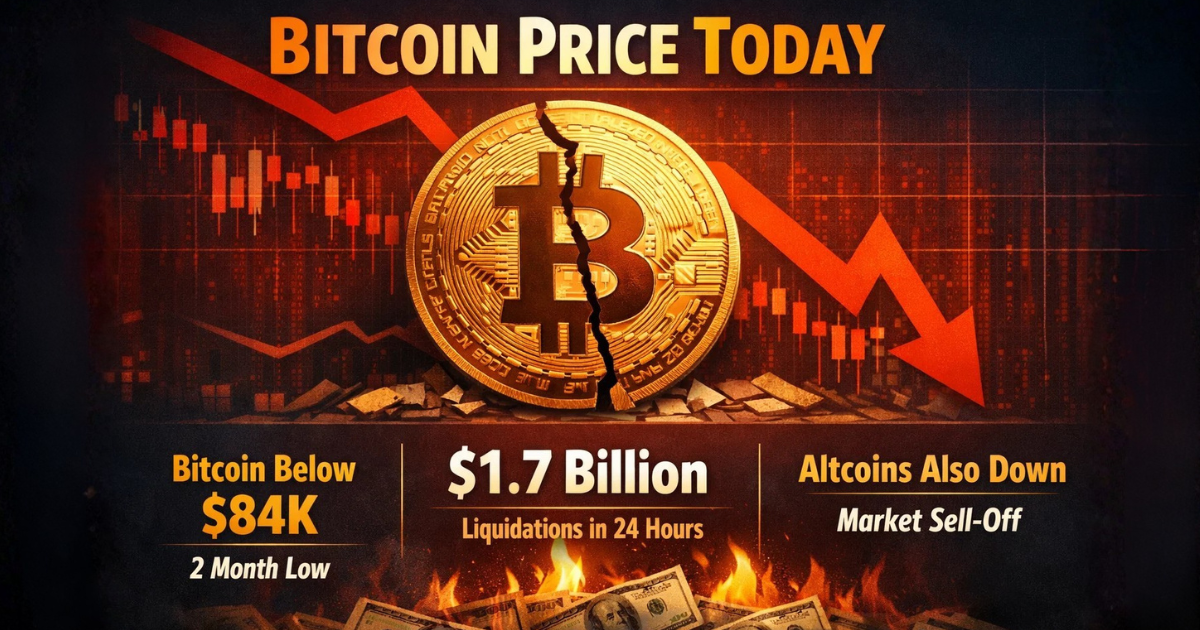
Why Bitcoin Price is Falling?
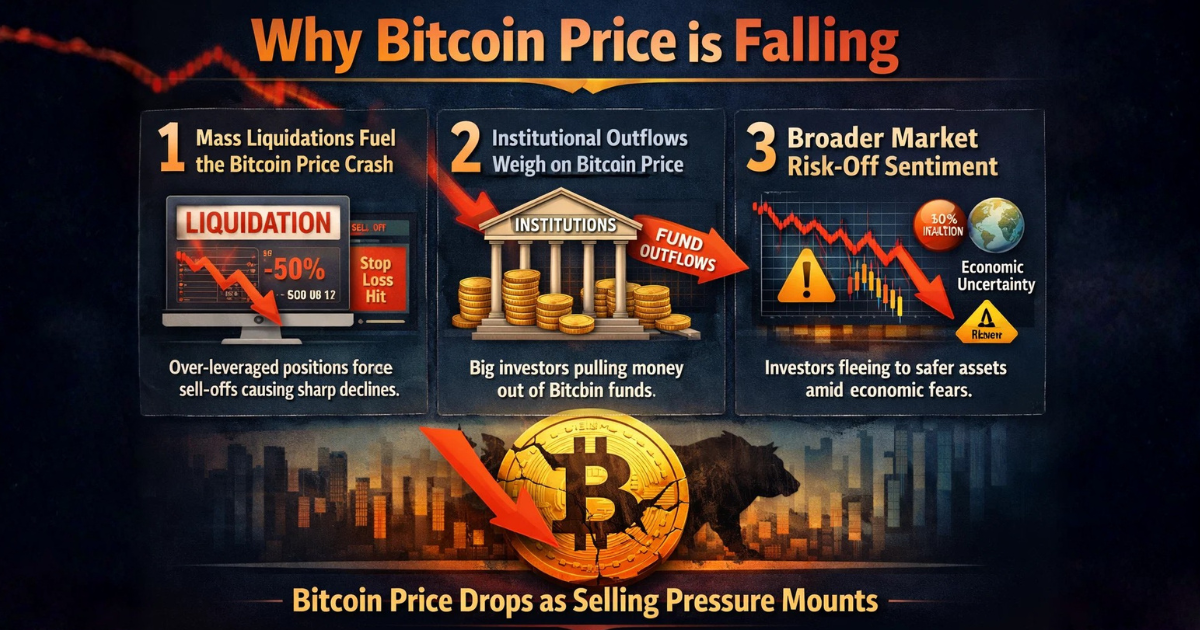
1. Mass Liquidations Fuel the Bitcoin Price Crash
Forced liquidations have been a significant driver of the current Bitcoin price falling scenario. When leveraged positions cannot meet margin requirements, exchanges automatically close them — triggering cascading sell-offs.
CoinDesk notes that the accelerated unwind of leveraged positions pushed Bitcoin and other major cryptocurrencies lower, highlighting the impact of margin trading on Bitcoin price volatility.
2. Institutional Outflows Weigh on Bitcoin Price
Institutional demand remains a critical factor in supporting Bitcoin price today. However, recent data shows that crypto ETF flows have turned negative, signaling declining appetite from large investors. These outflows amplify selling pressure and contribute to the ongoing Bitcoin price drop.
For more on this trend, read Bitcoin Outlook: Tom Lee’s $200K Prediction.
3. Broader Market Risk-Off Sentiment
The Block reported that Bitcoin’s recent slide below $84,000 coincided with a sell-off in tech stocks and metals. This broader market weakness is another reason why the Bitcoin price is falling, as investors move away from risk assets. For a related overview of global market pressures affecting crypto, see Asian Stocks Drop Amid Rising Silver and Gold Prices.
Bitcoin Price Analysis: Key Levels
Traders are monitoring critical support and resistance levels amid this Bitcoin price crash:
Support Levels:
- $80,000–$84,000, short-term support
- $75,000 — next major floor
Resistance Levels:
- $88,000–$90,000 — short-term breakout potential
- Sustained closes above $90,000 could restore bullish momentum
Technical signals are key to interpreting the Bitcoin price outlook and planning trades during volatile periods.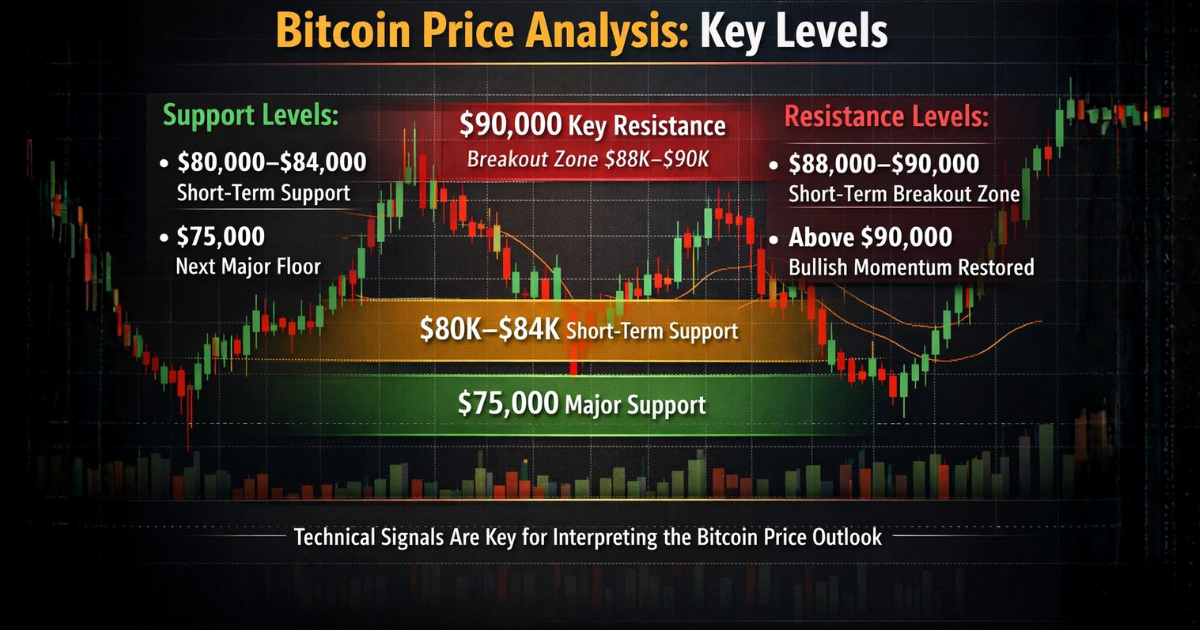
Bitcoin Price Outlook and Market Sentiment
Sentiment indicators show extreme fear in the market, reflecting the ongoing price of Bitcoin sell-off. Historically, these sentiment extremes sometimes align with market bottoms, creating potential opportunities for long-term holders.
For those monitoring the Bitcoin price today and anticipating future trends, also check Bitcoin Drops Below $92K Amid Tariff Fears.
Bitcoin Price Expectation Crash
The recent Bitcoin price drop reflects multiple converging factors:
- Accelerated price of Bitcoin liquidation
- Weakening institutional flows
- Risk-off sentiment in traditional markets
While short-term volatility remains high, the current pullback may present strategic opportunities for informed investors. Monitoring Bitcoin price analysis, technical support levels, and market sentiment will be essential for navigating this period of uncertainty.
For ongoing updates and in-depth insights into Bitcoin predicted price and broader crypto trends, stay tuned to FinanceCurves.
FAQs
What caused Bitcoin’s recent price crash?
Bitcoin’s price drop was driven largely by a wave of forced liquidations — when leveraged positions can’t meet margin requirements — which triggered cascading sell-offs across crypto markets.
How do liquidations affect Bitcoin’s price?
When leveraged traders are liquidated, exchanges automatically sell their positions, adding sudden selling volume that pushes prices lower and can lead to further liquidations in a feedback loop.
What other factors contributed to the sell-off?
Institutional outflows, declining ETF demand, and broader risk-off sentiment in traditional markets added downward pressure to Bitcoin’s price alongside the liquidations.
Did other cryptocurrencies fall too?
Yes, major tokens like Ethereum and other altcoins also dropped amid heightened volatility and broader market selling.
Is this crash a temporary pullback or a deeper trend?
Market analysts are watching key technical support levels and sentiment indicators to assess whether the downturn is a temporary pullback or part of a more extended correction; extreme fear readings can sometimes signal potential market bottoms.
Disclaimer
The information provided on this website is for informational and educational purposes only. While we strive to ensure accuracy and keep our content up to date, FinanceCurves makes no guarantees regarding the completeness, reliability, or accuracy of any information published.
Nothing on this site constitutes financial, tax, legal, or investment advice. Readers should consult a qualified financial advisor, certified tax professional, or licensed attorney before making any financial decisions. Your individual situation may vary, and decisions based on information from this website are made at your own risk.
FinanceCurves may reference government agencies, financial institutions, or official programs for informational purposes only. We are not affiliated with, endorsed by, or connected to any government entity, including the IRS or any federal or state agency. Some content may contain links to third-party websites for additional context or resources. We are not responsible for the content, accuracy, or practices of any external sites.
By using this website, you agree to this disclaimer and our terms of use.

Marshall Mason, Senior Market Analyst at FinanceCurves.com, has over 9 years of experience covering financial markets, cryptocurrencies, and macroeconomic trends. He delivers data-driven insights, independent analysis, and actionable guidance for investors and traders. Marshall leverages authoritative sources, market data, and regulatory updates to help readers navigate volatility, adoption trends, and the evolving landscape of global finance and digital assets.