Blockchain technology has grown from an obscure concept into a powerful tool that’s transforming finance, enterprise, and digital assets. In 2026, it continues to revolutionize industries worldwide. If you’re new to cryptocurrency, digital assets, or enterprise solutions, this guide will help you understand blockchain technology, how it works, its practical uses, and why it matters today. By the end, you’ll have the confidence to start your own blockchain journey.
Blockchain technology has grown from an obscure concept into a powerful tool that’s transforming finance, enterprise, and digital assets. In 2026, it continues to reshape industries worldwide. If you’re new to cryptocurrency, digital assets, or enterprise solutions, this guide will help you understand blockchain technology in 2026, how it works, its practical uses, and why it matters today. By the end, you’ll have the confidence to start your own blockchain journey.
What is Blockchain Technology?
At its core, blockchain technology is a distributed ledger that records, verifies, and stores data securely without relying on a central authority. Unlike traditional databases, blockchain records transactions immutably, so once you enter data, you cannot alter or delete it.
For beginners, a simple way to think about it is like a digital notebook that everyone in a network can see and verify, but no one can erase or tamper with. This makes blockchain ideal for applications such as digital currencies, financial institutions, and enterprise solutions.
While cryptocurrencies like Bitcoin and Ethereum rely on blockchain as their foundation, the technology’s applications extend far beyond money. For example, companies can track supply chains, governments can secure digital identities, and businesses can implement smart contracts for automatic agreement execution.
Example: In 2026, a UK logistics startup uses blockchain technology to track shipments from factory to customer, ensuring transparency and reducing fraud. For more beginner-friendly explanations, check blockchain technology explained by Investopedia.
How Does Blockchain Work?
A blockchain is made up of a series of blocks, each containing:
-
A record of transactions
-
Cryptographic hashes linking it to the previous block
-
Ownership information secured by a private key
These blocks form a secure chain, permanently stored on the network. The concept of digital timestamping was first developed by Stuart Haber and W. Scott Stornetta, and later applied by Satoshi Nakamoto to create Bitcoin, enabling digital currency without banks. The FOMC January 2026 Preview gives a clear look at what to expect from the Fed’s upcoming decisions and how they could affect crypto and stocks.”
Blockchain is decentralized, meaning no single entity controls it. Instead, transactions are verified by a network of participants, ensuring transparency, security, and trust.
Mini Case Study: Ethereum’s blockchain allows developers to create decentralized applications (dApps) for finance, gaming, and digital art marketplaces, all without relying on intermediaries. For a broader perspective on digital currencies, you can also check our beginner’s guide to crypto exchanges.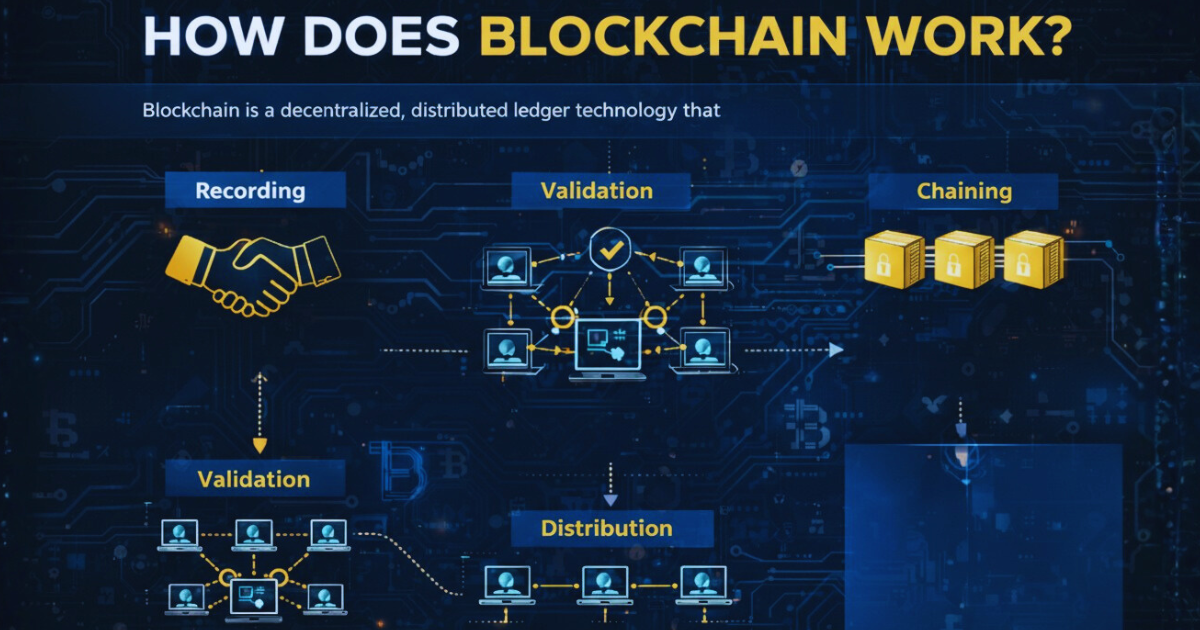
Types of Blockchains
Understanding the different blockchain types helps beginners know where each is best applied:
-
Public Blockchains – Open to anyone; examples include Bitcoin and Ethereum. They prioritize transparency and decentralization.
-
Permissioned Blockchains – Access is limited to approved participants, often used by companies for internal record-keeping.
-
Consortium Blockchains – Shared among multiple organizations, popular in finance for secure interbank operations.
Each type has its advantages, depending on privacy needs, scalability, and regulatory compliance.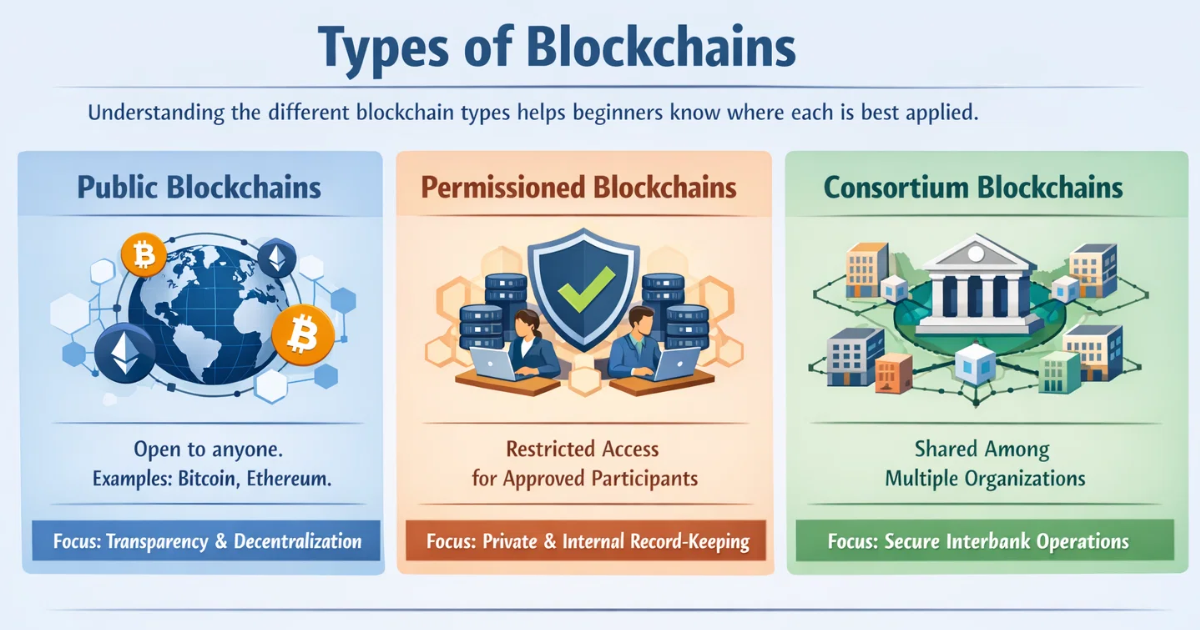
Key Blockchain Trends in 2026
Blockchain technology continues to evolve, and 2026 brings exciting trends:
-
Layer 2 scaling solutions – Speed up transactions and reduce fees, especially for Ethereum-based applications.
-
AI + Blockchain integration – Smart contracts enhanced with AI allow automated, intelligent decision-making.
-
Enterprise adoption – Businesses in supply chain, healthcare, and finance increasingly implement blockchain for efficiency and security.
-
Sustainable blockchain networks – New energy-efficient protocols like Proof of Stake minimize environmental impact.
These trends show that blockchain technology is no longer just a digital currency tool. Yet, it is a versatile system for business and personal use.
Main Benefits of Blockchain Technology
Blockchain offers several advantages that appeal to individuals and organizations:
-
Transparency: All authorized participants can view transactions.
-
Security: Cryptography and private keys protect digital assets.
-
Decentralization: Eliminates reliance on a central authority, reducing single points of failure.
-
Efficiency: Automates processes, removes intermediaries, and speeds up settlements.
-
Integrity: Each block strengthens the record of all previous transactions.
These benefits make blockchain useful across financial systems, enterprise platforms, and digital currencies.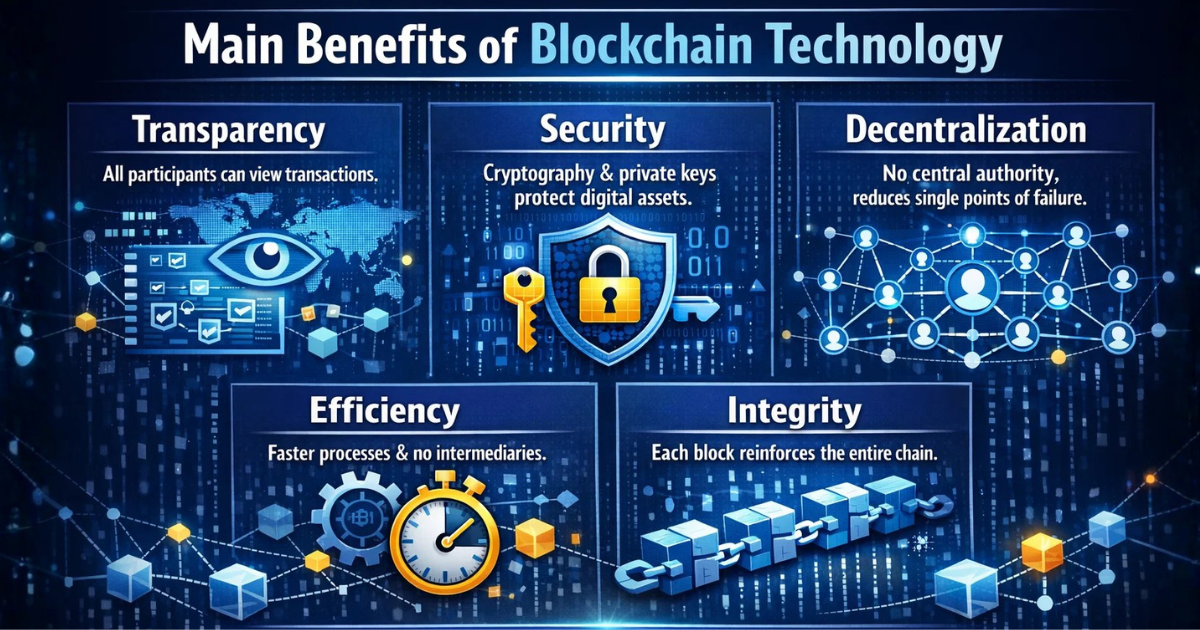
Practical Uses of Blockchain
Blockchain technology goes far beyond Bitcoin and Ethereum. Key applications include:
-
Financial Institutions: Distributed ledgers help with payments, settlements, and asset management.
-
Supply Chain Tracking: Ensures product authenticity and reduces fraud.
-
Smart Contracts: Automate agreements and enforce conditions without intermediaries.
-
Identity Verification: Governments and organizations use blockchain to protect sensitive personal information.
Mini Case Study: IBM’s enterprise blockchain solutions demonstrate how large organizations use blockchain to streamline operations, reduce errors, and improve trust across supply chains. Learn more about IBM enterprise blockchain solutions.
For cryptocurrency-specific applications, you can also see our Bitcoin price prediction post to understand blockchain in action.
How Beginners Can Start Learning Blockchain Technology
Starting your blockchain journey doesn’t have to be overwhelming. Here’s a simple roadmap:
-
Learn the Basics: Understand what blockchain technology is and how it functions.
-
Explore Wallets and Private Keys: Learn how to store digital assets securely.
-
Start Small: Try small Bitcoin or Ethereum transactions to gain hands-on experience.
-
Study Practical Applications: Explore blockchain use cases in supply chain, smart contracts, or decentralized finance (DeFi).
-
Follow Trends: Stay updated on the latest developments and tools in blockchain technology.
Tip: Beginner-friendly guides and tutorials, like those offered on FinanceCurves, can help you progress step by step.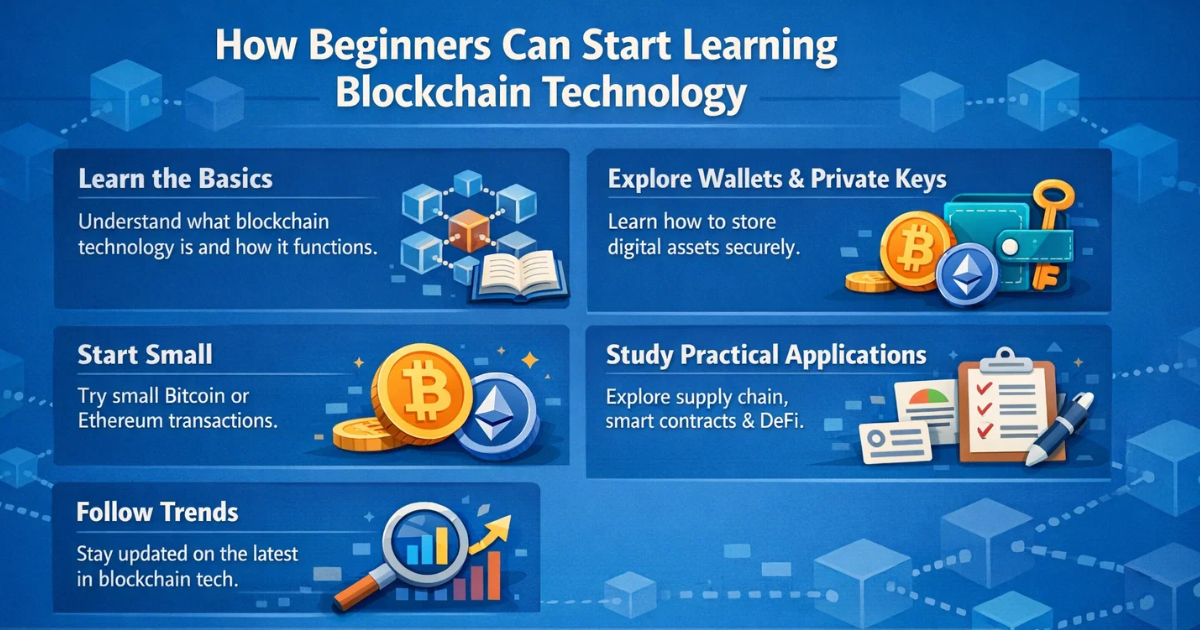
Common Blockchain Myths Debunked
-
Myth 1: Blockchain is only for cryptocurrency.
Truth: Blockchain is widely used for enterprise solutions, supply chains, identity verification, and smart contracts. -
Myth 2: Blockchain is anonymous.
Truth: Blockchain is pseudonymous; transactions are traceable, but private keys protect user identity. -
Myth 3: Blockchain is too technical for beginners.
Truth: Many beginner-friendly tools and resources make learning blockchain straightforward.
Unlock Blockchain’s Power: Start Your Journey with FinanceCurves
Blockchain technology in 2026 continues to reshape industries far beyond cryptocurrency. Its secure, transparent, and decentralized design empowers financial institutions, businesses, and individuals alike. By understanding the fundamentals, beginners can confidently navigate digital currencies, smart contracts, and distributed ledger technologies.
Stay on the edge of information, learn continuously, and apply practical insights — FinanceCurves is your trusted resource for beginner-friendly blockchain guides, market insights, and strategies to get started.
Frequently Asked Questions
Is blockchain technology only used for cryptocurrency?
No, While blockchain powers digital currencies like Bitcoin, it is also used for supply chains, identity verification, smart contracts, and enterprise data systems.
Can blockchain work without a central authority?
Yes! Blockchain is decentralized, meaning transactions are verified by a network instead of a central authority. Further, it improving transparency and security.
What is a private key in blockchain?
A private key is a secure digital code that allows you to access and control your digital assets stored on the blockchain.
Are blockchain transactions secure?
Yes! Blockchain uses cryptographic hashes and ledger technologies to protect data and ensure only valid transactions are recorded.
Is blockchain technology suitable for beginners to learn?
Absolutely! Beginners can start with basic blockchain concepts, understand how digital currency works, and gradually explore advanced blockchain solutions.
Disclaimer
The information provided on this website is for informational and educational purposes only. While we strive to ensure accuracy and keep our content up to date, FinanceCurves makes no guarantees regarding the completeness, reliability, or accuracy of any information published.
Nothing on this site constitutes financial, tax, legal, or investment advice. Readers should consult a qualified financial advisor, certified tax professional, or licensed attorney before making any financial decisions. Your individual situation may vary, and decisions based on information from this website are made at your own risk.
FinanceCurves may reference government agencies, financial institutions, or official programs for informational purposes only. We are not affiliated with, endorsed by, or connected to any government entity, including the IRS or any federal or state agency. Some content may contain links to third-party websites for additional context or resources. We are not responsible for the content, accuracy, or practices of any external sites.
By using this website, you agree to this disclaimer and our terms of use.

Charles Cooper is a Senior Cryptocurrency Analyst at FinanceCurves.com with over 10 years of experience in financial markets. He specializes in Bitcoin, digital assets, blockchain technology, and on-chain analysis, providing research-driven insights grounded in market data, macroeconomic trends, and risk management principles. Charles helps readers navigate volatility, adoption trends, and evolving regulatory and market dynamics in the cryptocurrency and broader financial landscape.