
As Americans gear up for the 2026 tax season, questions about IRS refund timing are flooding search engines. Social media rumors about a universal $2,000 direct deposit have made the rounds, but the reality is far simpler: most refunds follow the standard IRS schedule, and knowing the timing can help taxpayers plan ahead.IRS Refunds in 2026: What You Really Need to Know About Direct Deposit Timing
The IRS will begin accepting tax returns in late January 2026. Early filers who submit accurate returns and choose direct deposit usually see their refunds within 7 to 21 days. Those requesting paper checks or claiming refundable credits such as the Earned Income Tax Credit (EITC) may experience longer delays, sometimes stretching into late February or March.
Refund timing depends on several factors:
-
Filing method: E-filing with direct deposit is the fastest, while paper filings naturally take longer.
-
Credits claimed: Refundable credits, including the Child Tax Credit or EITC, require additional verification.
-
Accuracy: Mistakes or mismatched information can slow down processing.
-
IRS backlog: Seasonal spikes in filings can delay refunds further.
Following the official schedule and using direct deposit wherever possible is the fastest route to receiving your refund safely.
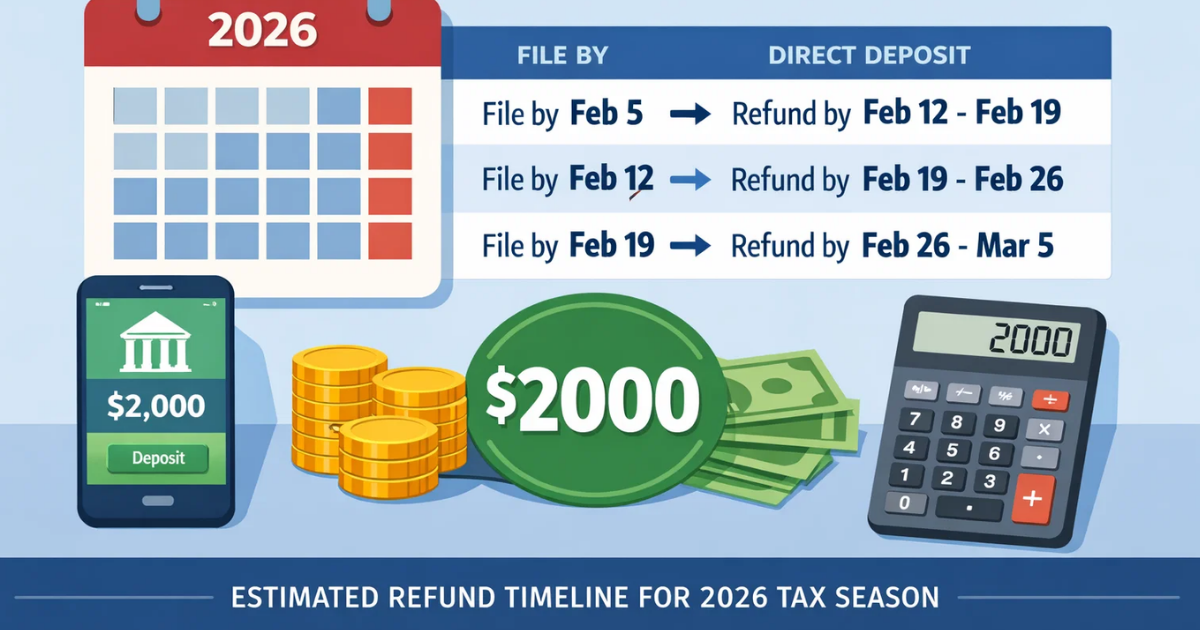
$2,000 Rumors Debunked: Why Most Deposits Are Just Standard Refunds
Despite viral claims online, any deposits around $2,000 are usually normal tax refunds, not a new stimulus or IRS relief program. It’s essential to separate regular tax refunds, proposed rebates like the tariff dividend, and viral misinformation.
The IRS provides the “Where’s My Refund?” tool, offering the most accurate and up-to-date status of any pending refund. Taxpayers should also confirm refund information directly on IRS.gov to avoid scams or fraudulent sites.
Financial experts recommend filing taxes early and double-checking bank account information to prevent delays. Electronic refunds are typically deposited within three weeks of acceptance, while paper checks may take four to six weeks.
News outlets like Yahoo Finance and CNBC explain that timing can vary by state and by the type of credit claimed. Many taxpayers misinterpret refunds around $2,000 as stimulus payments, but these amounts are often the result of over-withholding or earned credits, not any new federal initiative.
Understanding the IRS 2026 refund schedule is also helpful for planning bigger expenses, budgeting, and anticipating any tax adjustments. For comprehensive guidance on IRS payment timelines, refunds, and financial updates, check out our detailed post at FinanceCurves. Staying informed through credible sources helps taxpayers navigate the season confidently while avoiding misinformation.
FAQs
1. When does the IRS begin accepting 2026 tax returns?
The IRS officially began accepting 2026 (for the 2025 tax year) electronic and paper tax returns on January 26, 2026. Filing as soon as you have all your tax documents can help speed up processing.
2. How long does it typically take to get an IRS refund?
For most electronically filed returns with accurate direct deposit information, refunds are often issued in about 10–21 days from the date the IRS accepts your return.
3. Why are some refunds delayed until March?
Refunds claiming the Earned Income Tax Credit (EITC) or Additional Child Tax Credit (ACTC) cannot be issued before mid‑February under IRS rules, and many of these refunds may not arrive until around early March 2026.
4. Do paper checks still arrive for tax refunds?
The IRS is phasing out paper refund checks; direct deposit is now the standard and fastest method to receive your refund. If direct deposit info is missing, the IRS may freeze your refund until correct banking details are provided.
5. How can I check the status of my IRS refund?
Taxpayers can track refund progress using the IRS “Where’s My Refund?” tool on IRS.gov or the IRS2Go mobile app, which updates daily with key status stages: Return received → Refund approved → Refund sent.
Disclaimer
The information provided on this website is for informational and educational purposes only. While we strive to ensure accuracy and keep our content up to date, FinanceCurves makes no guarantees regarding the completeness, reliability, or accuracy of any information published.
Nothing on this site constitutes financial, tax, legal, or investment advice. Readers should consult a qualified financial advisor, certified tax professional, or licensed attorney before making any financial decisions. Your individual situation may vary, and decisions based on information from this website are made at your own risk.
FinanceCurves may reference government agencies, financial institutions, or official programs for informational purposes only. We are not affiliated with, endorsed by, or connected to any government entity, including the IRS or any federal or state agency. Some content may contain links to third-party websites for additional context or resources. We are not responsible for the content, accuracy, or practices of any external sites.
By using this website, you agree to this disclaimer and our terms of use.

Marshall Mason, Senior Market Analyst at FinanceCurves.com, has over 9 years of experience covering financial markets, cryptocurrencies, and macroeconomic trends. He delivers data-driven insights, independent analysis, and actionable guidance for investors and traders. Marshall leverages authoritative sources, market data, and regulatory updates to help readers navigate volatility, adoption trends, and the evolving landscape of global finance and digital assets.