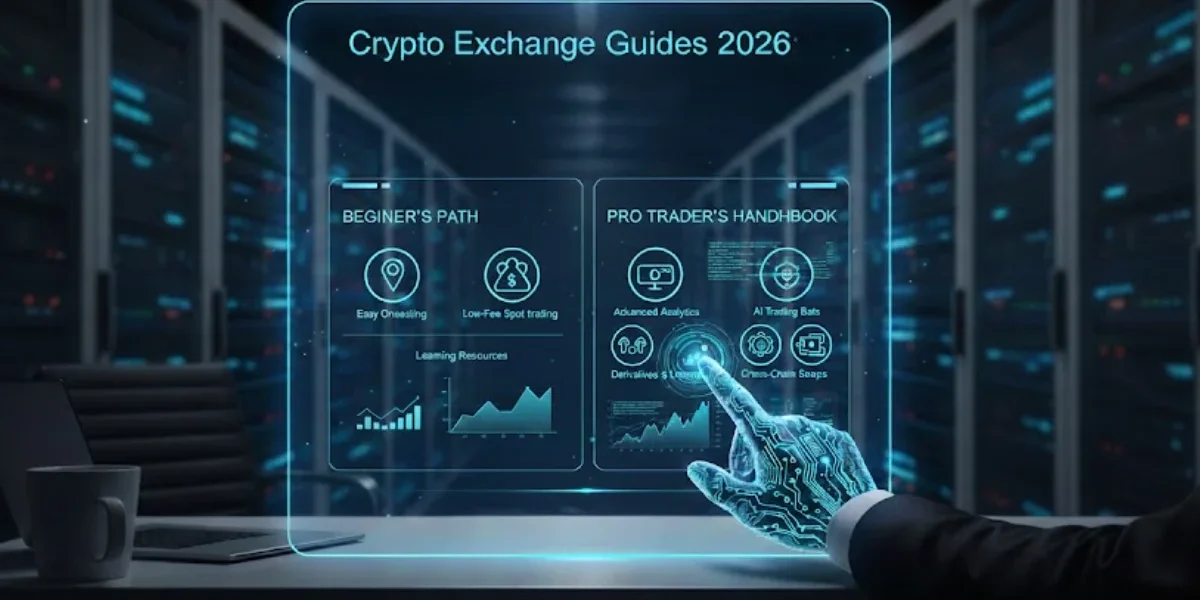
Cryptocurrency trading continues to expand as institutional and retail participation grows. According to CoinMarketCap, the global crypto market capitalization surpassed $1.2 trillion in early 2026, with Bitcoin (BTC) representing nearly 45% of total market value. Exchanges serve as the primary gateway to the crypto market, influencing your trading costs, security exposure, liquidity access, and long-term portfolio outcomes. Choosing the right exchange is no longer optional; it’s a strategic decision for both beginners and intermediate traders. This guide provides an in-depth look at top exchanges in 2026, comparing fees, security protocols, supported assets, and professional trading tools.
How Crypto Exchanges Work
A crypto exchange is a digital marketplace where you can buy, sell, and trade cryptocurrencies. Modern exchanges in 2026 offer:
- Order Matching Engines: Automatically pair buyers and sellers for fast trades.
- Custody Solutions: Some exchanges store crypto for you (CEX), while others let you maintain control (DEX).
- Trading Pairs: Trade crypto-to-crypto (BTC/ETH) or fiat-to-crypto (USD/BTC).
- Advanced Analytics: AI-driven tools for predicting market trends, portfolio management, and trade alerts.
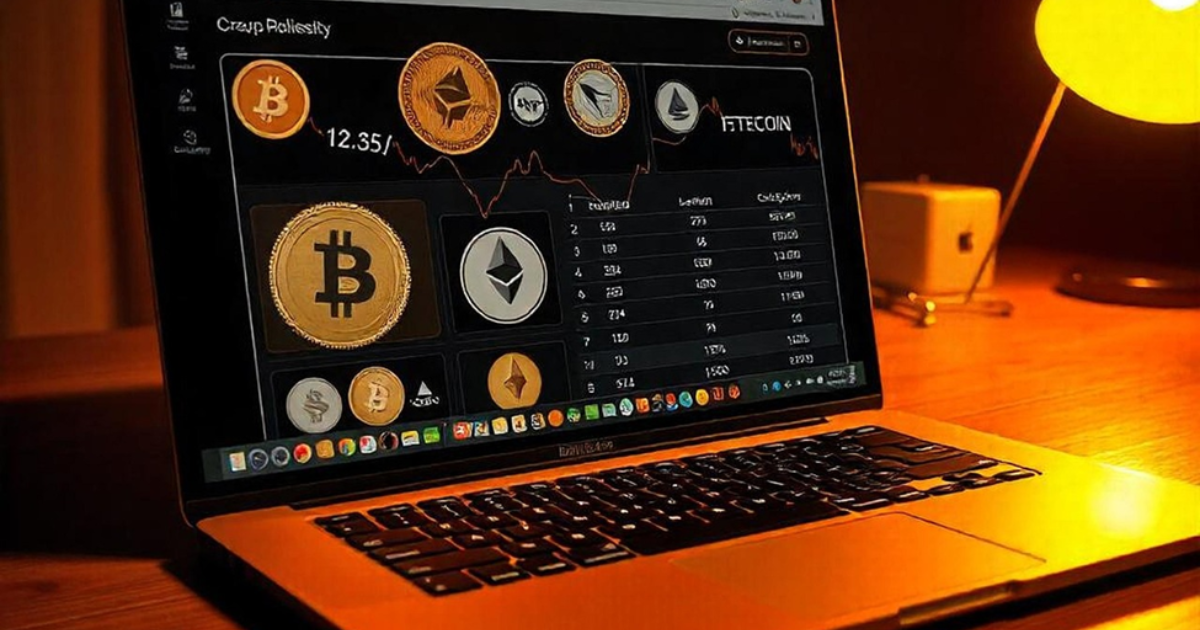
Exchanges are the backbone of crypto markets, facilitating liquidity and enabling users to access DeFi services directly from the platform. raders often rely on real-time cryptocurrency market data to track prices, volume, and exchange rankings before choosing a trading platform.
Types of Crypto Exchanges
Understanding the different types of crypto exchanges is essential for selecting a platform that aligns with your trading goals, risk tolerance, and experience level. Each type has unique advantages and drawbacks:
| Exchange Type | Best For | Key Advantage | Drawback |
| Centralized (CEX) | Beginners & active traders | High liquidity, fast transactions | Custody risk, regulated fees |
| Decentralized (DEX) | Privacy-conscious users | Self-custody, decentralized | Higher gas fees, technical complexity |
| Hybrid | Experienced traders | Combines CEX ease and DEX control | Emerging, less adoption |
Examples from 2026:
- CEX: Binance, Coinbase, Kraken
- DEX: Uniswap, PancakeSwap
- Hybrid: AscendEX, Bitget
Evaluating exchange transparency, liquidity metrics, and trust scores helps traders identify platforms with consistent trading activity and reliable execution. See our guide on how to buy crypto currency safley in USA.
How to Compare Crypto Exchanges: Fundamental Criteria
Before evaluating individual platforms, understand the critical factors that determine your trading experience:
- Security Standards: Custody protocols, wallet protections, and compliance measures.
- Fees and Costs: Trading fees, withdrawal charges, and spreads.
- Asset Selection & Liquidity: Number of supported cryptocurrencies and trade execution depth.
- Advanced Trading Features: Futures, margin trading, APIs, and order types.
Top Crypto Exchanges in 2026: Features, Fees, and Tools
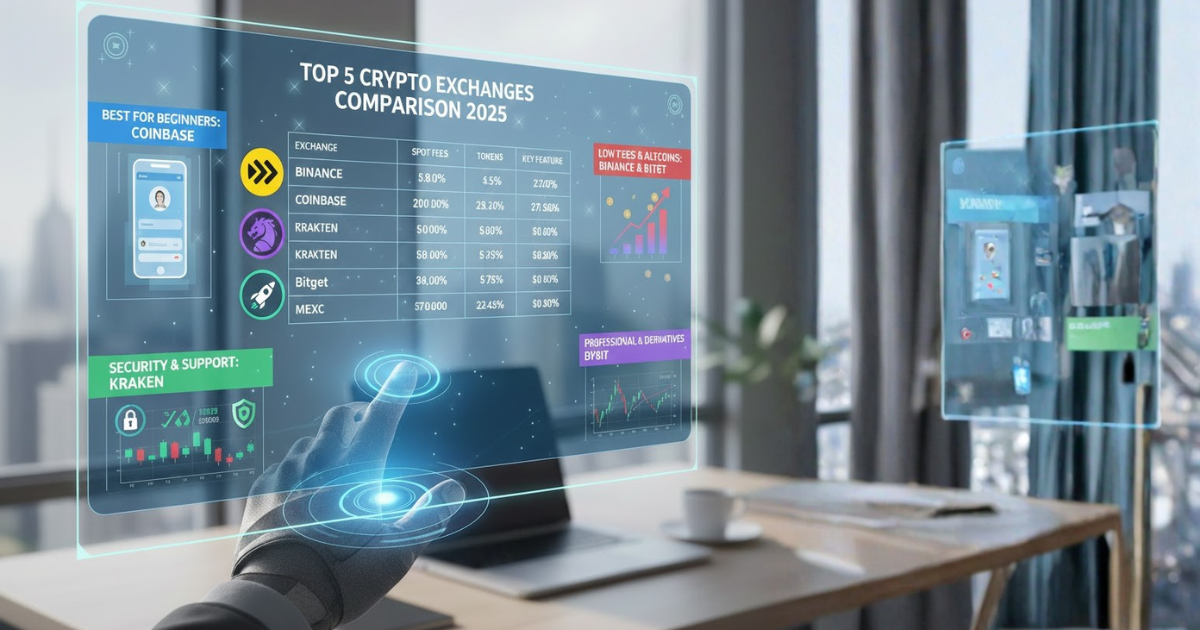
Choosing the right crypto exchange can significantly impact your trading efficiency, security, and potential profits. Each platform offers unique features, fee structures, and tools tailored to different types of traders For newcomers, understanding cryptocurrency trading basics is essential before placing their first trade on any exchange. Below, we break down the leading exchanges in 2026, highlighting what makes each one stand out.
| Exchange | Spot Fees (Maker/Taker) | Security Features | Liquidity | Best For |
| Binance | 0.10% / 0.10% | SAFU, cold storage, 2FA | High | All traders |
| Coinbase | 0.40% / 0.60% | Regulated, insured | Medium-High | Beginners, institutions |
| Kraken | 0.10% / 0.20% | Proof-of-reserves, audits | Medium | Security-focused traders |
| Bitget | 0.10% / 0.10% | Multi-sig wallets, audits | High | Derivatives & copy trading |
| OKX | 0.08% / 0.10% | Advanced 2FA, cold wallets | High | Experts, leveraged trading |
-
Binance — Best for High Volume and Advanced Traders
| Feature | Detail |
| Security | Multi-tier architecture, SAFU insurance fund |
| Fees | 0.10% standard, 0.075% with BNB discount |
| Tools | Advanced charting, derivatives, API |
| Supported Assets | 600+ cryptocurrencies |
Binance leads with the broadest range of trading pairs and powerful tools for active traders. Its SAFU Fund, implemented after previous security incidents, provides additional protection for user funds.
Example: Traders with ~$50,000 monthly volume can save over $25 per trade using the BNB fee discount, which compounds over time.
Internal Resource: See our BTC Price Analysis: Key Support & Resistance Levels.
External Source: Binance consistently ranks highest for spot trading volume globally according to blockchain analytics.
-
Coinbase — Best for Beginners and Compliance
| Feature | Detail |
| Security | FDIC-insured USD, 2FA, biometric logins |
| Fees | 0.5% spread + flat fees; Coinbase Pro: 0.04–0.50% |
| Tools | Real-time order books, staking, recurring buys |
| Supported Assets | 250+ cryptocurrencies |
Coinbase is widely recognized for regulatory compliance and a user-friendly interface, making it ideal for beginners. Strict KYC/AML procedures ensure security while simplifying onboarding.
External Source: According to Bloomberg, Coinbase saw a 30% increase in active users in late 2025.
Tip: Beginners benefit from Coinbase’s clean UI and strong custodial security, even if fees are higher.
-
Kraken — Security-Focused with Staking Opportunities
| Feature | Detail |
| Security | 95% of funds in cold storage, mandatory 2FA |
| Fees | 0–0.26% maker/taker |
| Tools | Futures, margin trading, staking |
| Supported Assets | 200+ cryptocurrencies |
Kraken is known for robust security protocols and staking programs for Proof-of-Stake tokens like Ethereum 2.0 and Solana, allowing users to earn passive rewards while maintaining liquidity.
Internal Resource: Learn advanced strategies in DeFi Derivative Trading 2026.
Best for: Traders seeking a mix of spot, derivatives, and passive income via staking.
-
Gemini — Ideal for Institutional and Compliance-Oriented Traders
| Feature | Detail |
| Security | SOC 2 Type II certification, insured custody |
| Fees | 0.35–1.49% |
| Tools | ActiveTrader interface, API |
| Supported Assets | 100+ cryptocurrencies |
Gemini emphasizes institutional-grade security and regulatory compliance. While fees are higher than other platforms, its insured custody solutions and strong compliance record make it a top choice for risk-conscious traders.
Risk Note: High fees make Gemini less cost-efficient for smaller or low-volume trades.
Fees, Spreads & How They Impact Trading
Understanding fees is critical for profitability, especially for new traders. Our best beginner guides to cryptocurrency trading 2026 emphasize the importance of comparing fees across platforms to maximize profits and avoid surprises.
- Spot Trading Fees: Paid per trade; some exchanges offer tiered discounts.
- Futures & Derivatives Fees: Usually lower than spot but involve leverage risk.
- Deposit & Withdrawal Fees: Vary by payment method and blockchain.
| Platform | Spot Maker | Spot Taker | Futures Maker | Futures Taker |
| Binance | 0.10% | 0.10% | 0.20% | 0.04% |
| Bitget | 0.10% | 0.10% | 0.20% | 0.06% |
| Kraken | 0.10% | 0.20% | 0.20% | 0.05% |
| Coinbase | 0.40% | 0.60% | 0.20% | 0.05% |
Tip: Holding native tokens like BNB (Binance) or KCS (KuCoin) can reduce trading fees by up to 50%, saving significant amounts over time.
Essential Security Measures for Crypto Traders
- Custody and Wallet Safety: Prefer exchanges storing ≥90% of funds in cold wallets.
- Insurance and Protections: Platforms like Binance maintain insurance funds for extreme loss events.
- Account Security Practices: Enable 2FA, withdrawal whitelisting, and email confirmations.
Remember: Exchange security does not replace hardware wallets for long-term crypto holdings.
Pro Trading Tools: Elevating Your Trading Game
- Futures and Derivatives: Leverage positions for higher potential gains—but higher risk.
- Margin Trading: Borrowed capital for increased exposure.
- API Access: Essential for algorithmic trading and automation.
- Charting & Order Types: Stop-loss, take-profit, depth charts, and technical indicators.
Example: Using stop-loss on Binance protects capital during 10–15% intraday BTC swings.
Security & Risk Management
Crypto exchanges face high-profile security risks:
- 2025 Hack Stats: Global losses attributed to hacking and fraudulent activities have surpassed $2.47 billion in 2025, according to the latest data compiled by CoinDesk.
- Top Threats: Phishing attacks, exchange hacks, unregulated platforms, and private key loss.
Best Practices:
- Use cold wallets for long-term storage.
- Enable 2FA or hardware keys.
- Trade on regulated exchanges.
- Verify proof-of-reserves audits.
Real-World Example: CoinDCX prevented major fund loss during a $44M breach in 2025 thanks to rapid risk management. Understanding how to protect funds is critical, especially during rising cyber threats, as explained in our guide on DeFi hacks and crypto security risks in 2026.

Beginner & Expert Trading Workflows
Beginners:
- Start with regulated CEX
- Complete KYC/AML
- Fund account and use market orders first
- Gradually explore limit orders and small trades
Experts:
- Track liquidity depth across multiple exchanges
- Use limit and algorithmic orders
- Employ trading bots and AI analytics
- Monitor audits, insurance, and cross-chain swaps
Advanced Features for 2026 Traders
- Staking & Lending: Earn passive income with crypto holdings.
- Automated Trading Bots: Use AI for 24/7 market monitoring.
- Cross-Chain Swaps: Trade assets across multiple blockchains seamlessly.
- Portfolio Analytics: Track multiple wallets and exchanges in real-time.

Emerging Trends for 2026
- DeFi Expansion: User-friendly DeFi platforms integrated into exchanges.
- AI-Powered Analytics: Smarter trade signals and risk management.
- Institutional Adoption: Banks and fintech bridging crypto to fiat.
- Green Crypto Initiatives: Exchanges supporting eco-friendly blockchains.
Step-by-Step: How to Start Trading on an Exchange
- Create an account and complete KYC verification.
- Enable 2FA, whitelisting, and secure backups.
- Fund your account via bank transfer or crypto deposit.
- Choose trading pair and execute orders (e.g., BTC/USDT, ETH/USDT).
- Monitor positions using alerts and dashboards.
- Withdraw long-term holdings to cold storage wallets like Ledger or Trezor.
Regulatory and Market Risk Considerations
- Regulatory Change Risk: Exchanges adjust services for new laws.
- Market Risk: Price swings can result in losses, especially with leverage.
- Custodial Risk: Holding funds on an exchange exposes you to third-party solvency and security risks.
Choose Wisely and Trade Confidently in 2026
Selecting the right crypto exchange impacts security, cost efficiency, and trading outcomes. Pair exchange accounts with cold wallets to safeguard assets. Compare the best crypto exchanges and trading tools today at FinanceCurves and trade with confidence.
FAQs
Q1: What is the safest crypto exchange in 2026?
Regulated CEX platforms like Coinbase, Kraken, and Binance with insurance and strong audits.
Q2: Can beginners trade on DEXs?
Yes, but they require more technical knowledge and self-custody management.
Q3: How do trading fees affect profits?
Fees compound with frequent trades; use tiered discounts or native tokens to reduce costs.
Q4: Should I keep crypto on an exchange?
Short-term trades are fine, but for long-term holding, use cold wallets.
Q5: What tools should advanced traders use in 2026?
AI analytics, trading bots, cross-chain swaps, and portfolio tracking dashboards.
Disclaimer
The information provided on this website is for informational and educational purposes only. While we strive to ensure accuracy and keep our content up to date, FinanceCurves makes no guarantees regarding the completeness, reliability, or accuracy of any information published.
Nothing on this site constitutes financial, tax, legal, or investment advice. Readers should consult a qualified financial advisor, certified tax professional, or licensed attorney before making any financial decisions. Your individual situation may vary, and decisions based on information from this website are made at your own risk.
FinanceCurves may reference government agencies, financial institutions, or official programs for informational purposes only. We are not affiliated with, endorsed by, or connected to any government entity, including the IRS or any federal or state agency. Some content may contain links to third-party websites for additional context or resources. We are not responsible for the content, accuracy, or practices of any external sites.
By using this website, you agree to this disclaimer and our terms of use.

Charles Cooper is a Senior Cryptocurrency Analyst at FinanceCurves.com with over 10 years of experience in financial markets. He specializes in Bitcoin, digital assets, blockchain technology, and on-chain analysis, providing research-driven insights grounded in market data, macroeconomic trends, and risk management principles. Charles helps readers navigate volatility, adoption trends, and evolving regulatory and market dynamics in the cryptocurrency and broader financial landscape.